



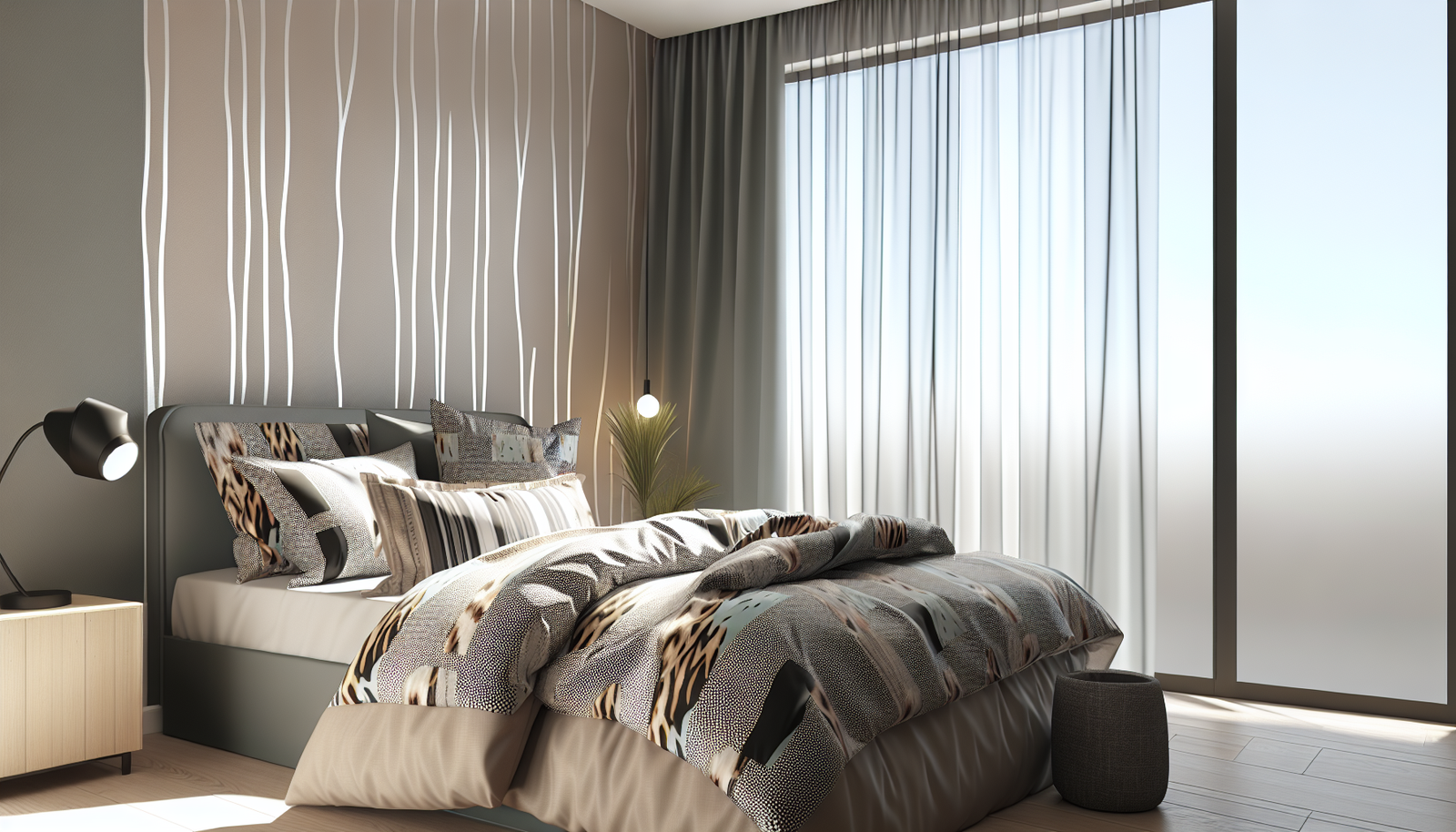

Picture this: you walk into your bedroom, and instantly, a wave of calm and curated style washes over you. No longer just a place to sleep, your bedroom has become a personal sanctuary, a true reflection of your aesthetic. The secret to this transformation often lies in one powerful element: your duvet cover. Specifically, learning how to pick duvet covers with statement patterns. A duvet cover isn’t just a protective layer; it’s the largest single textile in your bedroom, making it the ultimate canvas to express your personality and tie your decor together.
Many homeowners grapple with plain bedding, afraid of committing to a bold choice, or they struggle to make a chosen pattern feel cohesive rather than chaotic. The challenge isn’t merely about choosing a pattern you like; it’s about understanding scale, color psychology, and how different motifs interact with the existing elements in your room. We’ve all seen bedrooms where patterns clash, or a beautiful duvet cover appears lost in an otherwise uninspired space. The goal is to create a harmonious, eye-catching design that speaks volumes without uttering a word.
This comprehensive guide will show you precisely how to pick duvet covers with statement patterns that elevate your bedroom from ordinary to extraordinary. We’ll dive into the intricacies of pattern identification, color coordination, fabric selection, and styling techniques that designers use. By the end, you’ll be armed with the confidence and knowledge to select a duvet cover that not only catches the eye but also creates a cohesive, stylish, and deeply personal sanctuary. Get ready to transform your sleep space into the designer bedroom you’ve always envisioned.
Understanding the Power of a Statement Patterned Duvet Cover
A duvet cover, especially one featuring a bold or unique pattern, is more than just bedding; it’s a critical design element. It acts as the focal point of your bedroom, setting the tone for the entire space and significantly influencing its perceived style and mood. When you choose to pick duvet covers with statement patterns, you’re embracing an opportunity to inject personality and creative energy into your personal retreat. This isn’t just about covering your duvet; it’s about making a deliberate design choice that speaks volumes.
Why Your Duvet Cover is the Ultimate Focal Point
The bed is typically the largest furniture piece in any bedroom. Consequently, the duvet cover, which envelops much of the bed’s surface, automatically draws the eye. Its size means it dictates a large portion of the room’s visual weight and aesthetic direction. A well-chosen statement pattern can anchor the room, provide a burst of color, or introduce texture and depth that might otherwise be missing. It’s a foundational piece for building your bedroom’s overall design narrative.
Consider the psychological impact. Our sleeping spaces are intimate and personal. The patterns, colors, and textures we surround ourselves with can affect our mood, relaxation levels, and even our sleep quality. A calming floral can evoke tranquility, while a geometric pattern might inspire creativity or a sense of modern order. Learning how to pick duvet covers with statement patterns wisely transforms a functional item into an emotional and aesthetic experience every time you step into the room.
Defining “Statement Pattern” for Your Design Aesthetic
What exactly constitutes a “statement pattern”? It’s not necessarily the loudest or most vibrant design. Rather, a statement pattern is one that intentionally captures attention and serves as a primary decorative element. It could be:
- Large-scale graphics: Oversized florals, bold geometrics, or abstract strokes.
- Intricate small-scale designs: Paisley, damask, or toile that, despite their detail, create a strong visual impact when seen en masse.
- Unusual motifs: Exotic animals, celestial themes, maps, or unique artistic renditions.
- High-contrast color palettes: A pattern with a striking juxtaposition of light and dark, or complementary colors.
Ultimately, a statement pattern should evoke a feeling, narrate a story, or define a specific style within your bedroom. When you pick duvet covers with statement patterns, you’re choosing personality over blandness, intention over indifference.
Bland vs. Bold: The Impact on Bedroom Atmosphere
Let’s compare the impact. A plain white or beige duvet cover offers a clean, minimalist aesthetic. It can be calming and versatile, serving as a blank canvas. However, it often lacks warmth, character, and visual interest, potentially leaving the room feeling sterile or unfinished. It requires other elements – throws, pillows, art – to carry the design burden.
A statement patterned duvet cover, on the other hand, immediately infuses the room with energy and depth. It reduces the need for excessive accessorizing because it largely defines the room’s character itself. It can:
- Add dynamism: Geometrics or stripes create a sense of movement.
- Introduce softness: Organic florals or botanical prints can soften a modern space.
- Enhance sophistication: Damask or intricate medallions lend an air of luxury.
- Reflect personality: Quirky animal prints or pop-art designs speak to individual tastes.
The transition from bland to bold is not just about aesthetics; it’s about making your bedroom feel more lived-in, more personal, and ultimately, more “you.” The goal is to pick duvet covers with statement patterns that resonate deeply with your desired atmosphere, ensuring your bedroom is a place you genuinely love.
Deciphering Pattern Types: Your Style Language
Before you can effectively pick duvet covers with statement patterns, you need to understand the vast vocabulary of patterns available. Each type carries its own aesthetic weight and communicates a different mood. By familiarizing yourself with these categories, you can better articulate the style you’re aiming for and select a pattern that truly speaks to your design vision.
Geometric Patterns: Modern, Structured, and Dynamic
Geometric patterns encompass designs made of abstract, non-representational shapes like circles, squares, triangles, lines, and polygons. They are often associated with modern, contemporary, and minimalist aesthetics. When you pick duvet covers with statement patterns that are geometric, you’re opting for order and a strong visual identity.
- Stripes: Classic and versatile. Vertical stripes elongate a room; horizontal can widen it. Bold, contrasting stripes make a powerful statement.
- Chevrons & Zigzags: Energetic and dynamic, adding movement and a sense of direction.
- Grids & Lattices: Offer a formal, structured look, often seen in Art Deco or traditional designs, but can be modernized with color.
- Abstract Polygons: Think hexagons, tessellating patterns, or irregular shapes. These are highly contemporary and can create optical illusions.
- Optical Illusions: Patterns designed to trick the eye, creating depth or a sense of motion.
Geometric patterns are excellent for adding a crisp, clean, decisive feel to a bedroom. They work well with solid colors and metallic accents.
Organic & Floral Patterns: Nature-Inspired Tranquility and Romance
Organic and floral patterns draw inspiration from the natural world – leaves, flowers, vines, animal motifs, and natural textures. These patterns tend to evoke feelings of tranquility, romance, and a connection to nature. When you pick duvet covers with statement patterns from this category, you’re often aiming for a softer, more inviting ambiance.
- Botanical Prints: Realistic or stylized depictions of plants, leaves, and flowers. Can range from delicate wildflowers to bold tropical foliage.
- Chintz & Grandmillennial Florals: Traditional, often highly detailed floral patterns, sometimes with birds or insects, offering a vintage or cottagecore vibe.
- Abstract Organic: Flowing lines and shapes that suggest natural forms without explicit depiction. Think watercolor effects or marbled patterns.
- Palm & Tropical: Large-scale leaves and vibrant flowers, perfect for a breezy, resort-like feel.
These patterns are ideal for creating a serene, lush, or romantic bedroom. They pair beautifully with natural materials like wood, linen, and rattan.
Abstract & Artistic Patterns: Modern Expression and Individuality
Abstract patterns are non-representational, focusing on shapes, colors, lines, and textures to create a visual composition that often defies easy categorization. Artistic patterns might mimic brushstrokes, splatter paint, or evoke specific art movements. When you pick duvet covers with statement patterns in this realm, you’re making a strong statement about individuality and modern taste.
- Watercolor & Ink Wash: Soft, blended colors and fluid lines, creating a dreamy or artistic effect.
- Brushstroke & Painterly: Imitates the texture and movement of paint on a canvas, adding an artistic touch.
- Marbled & Terrazzo: Swirling, fluid patterns or speckled, aggregate designs that are very on-trend.
- Splatter & Drip: Raw, edgy, and modern, bringing an urban or avant-garde feel.
These patterns are perfect for contemporary spaces, artistic homes, or anyone wanting to introduce an element of surprise and unique visual texture. They often pair well with minimalist furniture to allow the pattern to truly shine.
Global & Ethnic Patterns: Cultural Richness and Wanderlust
Global and ethnic patterns draw inspiration from diverse cultures, traditions, and regions around the world. These patterns often carry deep historical and cultural significance, bringing a sense of history, travel, and adventure to a space. When you pick duvet covers with statement patterns from this category, you’re telling a story of wanderlust and appreciation for global artistry.
- Ikat: A dyeing technique creating blurred, geometric patterns, often from Southeast Asia or South America.
- Paisley: A Persian teardrop-shaped motif with a curved upper end, symbolizing fertility and life.
- Moroccan & Bohemian: Intricate tile-like designs, mandalas, or free-spirited, layered patterns.
- African Mudcloth & Kuba Cloth: Geometric, earthy patterns often in neutral tones, inspired by traditional textiles.
- Damask & Toile de Jouy: Classic, often monochromatic, intricate patterns featuring repeating motifs (damask) or pastoral scenes (toile).
These patterns work beautifully in bohemian, eclectic, or traditionally rich settings. They can bridge cultural gaps and add layers of meaning to your decor.
Image Suggestion: A split image or carousel showing examples of each pattern type (geometric, floral, abstract, global) on duvet covers, clearly labeled. Emphasize scale and typical color palettes for each.
Alt-text: “Examples of geometric, floral, abstract, and global patterned duvet covers illustrating different design styles.”
Color Theory in Pattern: Harmonizing Your Palette
Color is arguably the most powerful element in any pattern. The chosen colors not only dictate the mood of your bedroom but also influence how the pattern interacts with other elements in your space. Understanding basic color theory is crucial when you pick duvet covers with statement patterns, ensuring your selection creates harmony rather than chaos.
Choosing a Dominant Color & Accent Hues
Every patterned duvet cover has a dominant color – the one that covers the largest surface area or is the most visually striking. This dominant color will significantly influence the overall feel of your bedroom. It’s often wise to choose a dominant color that complements or acts as a neutral against your wall color or existing furniture.
- Dominant Color: This sets the primary mood. A dominant blue may feel serene, a dominant green refreshing, a dominant grey sophisticated.
- Accent Hues: These are the secondary and tertiary colors within the pattern. They offer opportunities to tie in accessories like throw pillows, curtains, or artwork. If your duvet cover has touches of gold, you can echo that with a gold-framed mirror or a metallic lamp base.
When you pick duvet covers with statement patterns, consider the 60-30-10 rule for your overall room: 60% dominant color (walls, large furniture), 30% secondary color (drapery, smaller furniture), 10% accent color (accessories, art). Your duvet cover might occupy a large portion of that 30% or even serve as the 10% accent if it’s exceptionally bold against a neutral backdrop.
Warm vs. Cool Tones: Setting the Mood
The undertones of your pattern’s colors play a massive role in the room’s atmosphere:
- Warm Tones (Reds, Oranges, Yellows): These colors tend to feel energetic, inviting, and cozy. They advance visually, making a space feel smaller and more intimate. A duvet cover with dominant warm tones can be very vibrant and stimulating. If your bedroom needs a burst of life, consider patterns featuring rich maroons, terracotta, or mustard yellows.
- Cool Tones (Blues, Greens, Purples): These colors typically evoke calmness, serenity, and spaciousness. They recede visually, making a room feel larger and more open. A duvet cover with dominant cool tones can create a tranquil and restful environment, perfect for unwinding. Think soft blues, mint greens, or subtle lavenders.
Often, patterns blend both warm and cool elements. The key is to identify which undertone is stronger and how it aligns with the mood you want to create in your bedroom. This thoughtful consideration helps you pick duvet covers with statement patterns that truly soothe or invigorate.
Monochromatic, Analogous, or Complementary Schemes
Understanding color schemes can guide your pattern choice and integration:
- Monochromatic: Using different shades, tints, and tones of a single color. A pattern in a monochromatic scheme is sophisticated and calming, creating depth without overwhelming visual contrast. Example: a pattern using light blue, medium blue, and navy.
- Analogous: Using colors that are next to each other on the color wheel (e.g., blue, blue-green, green). This creates a harmonious, visually pleasing, and natural flow. A pattern with analogous colors feels rich yet gentle.
- Complementary: Using colors opposite each other on the color wheel (e.g., blue and orange, red and green). This creates high contrast and visual excitement. A statement pattern using complementary colors will be very bold and dynamic, demanding attention. Use sparingly and thoughtfully to avoid overwhelming the space.
When trying to pick duvet covers with statement patterns, consider which color scheme aligns with your overall design philosophy. A subtle pattern might benefit from analogous colors, while a truly bold statement could leverage complementary hues for maximum impact.
Scale and Proportionality: Making the Pattern Fit
The scale of a pattern – its size relative to its surroundings – is paramount to its success as a statement piece. A pattern can be stunning on a swatch but overwhelming on a king-sized bed if the scale isn’t right. This section helps you understand how to pick duvet covers with statement patterns that are proportional to your bedroom’s size, ceiling height, and existing furniture, ensuring visual balance and harmony.
Large-Scale Patterns: Bold and Expansive
Large-scale patterns feature motifs that are big, expansive, and often have significant spacing between repetitions. Think oversized florals, sweeping abstract strokes, or colossal geometric shapes. They are inherently eye-catching and can make a strong design statement.
- Best for: Larger bedrooms with high ceilings. In these spaces, large patterns can look luxurious and sophisticated, helping to fill the visual void and making the room feel more intimate without overwhelming it.
- Impact: They can make a smaller room feel even smaller if not balanced correctly. However, a single large motif that spills across the duvet can create an artistic, mural-like effect even in compact spaces.
- Styling Tip: Pair with solid-colored shams or a simple headboard to let the pattern breathe. Avoid too many other busy patterns in the room.
The confidence to pick duvet covers with statement patterns that are large-scale comes from understanding your room’s dimensions and aiming for grandeur.
Small-Scale Patterns: Detailed and Subtler Statements
Small-scale patterns involve intricate, tightly packed motifs that repeat frequently. Think delicate toile, busy paisleys, small geometrics, or tightly woven textures. While they might not scream “statement” in the same way a large floral does, their cumulative effect can be incredibly powerful.
- Best for: Smaller bedrooms or rooms where you want a detailed design without being overwhelmed. Small patterns can add texture and interest without visually shrinking the space.
- Impact: From a distance, small patterns can sometimes read as a textured solid, offering a subtle statement. Up close, their detail is revealed, adding a layer of sophistication.
- Styling Tip: Small-scale patterns are excellent for mixing with other patterns (often larger ones) to add complexity, or for layering behind solid elements.
For those who love intricate design but prefer a softer declaration, learning how to pick duvet covers with statement patterns that are small-scale yet rich in detail is key.
Mixing Scales for Depth and Interest
One of the most effective ways to make a statement with patterns, and to make your bedroom look professionally designed, is to thoughtfully mix pattern scales. This adds visual depth, excitement, and a sense of layered sophistication.
The Golden Rule: When mixing patterns, vary their scale. Pair a large-scale pattern with a medium-scale pattern, and a small-scale pattern. Avoid mixing patterns of similar scale, as they tend to clash rather than complement.
Consider this progression when you pick duvet covers with statement patterns as your foundation:
- Primary Statement (Duvet Cover): Choose your dominant large-scale or bold medium-scale pattern here.
- Secondary Pattern (Pillows/Throws): Select a smaller or different type of pattern (e.g., geometric with floral) for throw pillows or blankets, ensuring colors tie back to the duvet.
- Tertiary Pattern (Subtle Detail): Introduce a tiny geometric, a varied texture (like a subtle stripe on a sheet), or a block color that grounds the other patterns.
For example, if your duvet cover features a large tropical leaf print, you might layer it with throw pillows in a medium-sized geometric ikat, and then add a subtle chevron-textured blanket. The key is that the patterns should share at least one common color to maintain cohesion.
Image Suggestion: An infographic illustrating pattern scale. Three beds shown: one with a large-scale pattern, one with a small-scale pattern, and one demonstrating a successful mix of large, medium, and small patterns with arrows pointing to each element.
Alt-text: “Infographic demonstrating optimal pattern scale for duvet covers, showing examples of large, small, and mixed pattern scales in bedroom design.”
Fabric & Texture: The Unsung Heroes of Statement Bedding
While pattern and color are the most immediate visual elements, the fabric and texture of your duvet cover play a crucial role in its statement quality, enhancing comfort, durability, and overall aesthetic. The way light hits different textures can even influence how a pattern appears. Therefore, to truly pick duvet covers with statement patterns, you must consider the material as meticulously as the design.
Luxurious Textures: Elevating the Visual & Tactile
The texture of a fabric adds another dimension to your statement pattern. It can make a simple pattern feel opulent or a bold pattern feel grounded. Different textures interact with light in unique ways, creating subtle shadows and highlights that bring a pattern to life.
- Velvet: Offers a rich, plush feel and a luxurious sheen. Statement patterns on velvet gain a dramatic, deep quality. Ideal for opulent or dramatic bedroom styles.
- Silk/Satin: Smooth, lustrous, and undeniably elegant. Patterns on silk appear vibrant and sophisticated, catching the light beautifully. Perfect for a glamorous or romantic aesthetic.
- Jacquard: A weaving technique that creates complex, raised patterns directly in the fabric. Often seen with damask or floral patterns, giving them an inherent textural depth.
- Embroidered: Adds tactile dimension and bespoke craftsmanship. An embroidered geometric or floral pattern feels high-end and artisanal.
When you pick duvet covers with statement patterns that have an inherent luxurious texture, you’re doubling down on impact through both sight and touch.
Comfort & Durability: Practical Considerations for Everyday Living
A statement duvet cover isn’t just for looking at; it’s for living with. Comfort and durability are non-negotiable. The best patterned duvet covers combine striking aesthetics with practical longevity and a pleasant feel against the skin.
| Fabric Type | Comfort Profile | Durability & Maintenance | Pattern Suitability |
|---|---|---|---|
| Cotton (Percale) | Crisp, cool, breathable. Excellent for hot sleepers. | Very durable, softens with washes, easy to care for (machine wash). | Holds sharp, detailed patterns well; vibrant colors. |
| Cotton (Sateen) | Soft, smooth, subtle sheen. Feels luxurious, good for all seasons. | Durable but can snag. Wrinkles less than percale. | Colors appear rich; good for more sophisticated, nuanced patterns. |
| Linen | Breathable, moisture-wicking, naturally textured. Gets softer with age. | Highly durable, hypoallergenic. Wrinkles easily, requires specific care. | Natural, earthy patterns; subtle geometrics; relaxed aesthetics. |
| Tencel/Lyocell | Silky smooth, incredibly soft, eco-friendly. Excellent for sensitive skin. | Durable, resistant to wrinkles, generally easy care. | Holds color beautifully, ideal for vibrant and detailed patterns. |
| Flannel | Warm, cozy, soft. Ideal for colder climates. | Durable, may pill slightly over time. | Plaids, classic stripes, simple naturals; creates a rustic statement. |
When you pick duvet covers with statement patterns, think about your climate, your skin sensitivities, and how much effort you’re willing to put into maintenance. A beautiful pattern on an uncomfortable fabric defeats the purpose of a cozy bedroom.
Thread Count vs. Weave: Beyond the Numbers Game
Many consumers focus solely on thread count, but it’s only one piece of the puzzle. The weave of the fabric is often more indicative of its feel and durability.
- Thread Count: Refers to the number of threads woven into one square inch of fabric. While a higher thread count often implies softness (e.g., 300-600 is excellent for cotton), excessively high numbers can sometimes indicate thinner threads or multi-ply yarns that don’t always translate to better quality.
- Weave: This refers to how the threads are interlaced.
- Percale Weave: A plain, tight weave creating a crisp, cool fabric. More matte finish, excellent for sharp patterns.
- Sateen Weave: Creates a smooth, lustrous surface with more threads on the surface, giving it a silky feel and subtle sheen. Colors and patterns appear richer.
- Twill Weave: Diagonal rib pattern, like denim, offering durability and a distinctive texture.
- Jacquard Weave: Intricate patterns woven directly into the fabric, providing texture and definition without printing. This is often an inherently “statement” fabric.
Therefore, when learning how to pick duvet covers with statement patterns, consider the weave as much as, if not more than, the thread count. The weave will influence how the pattern sits on the fabric, how durable it is, and how it feels against your skin.
Integrating Your Statement Duvet: Room Harmony
A statement duvet cover doesn’t exist in a vacuum. Its impact is amplified or diminished by how well it integrates with the rest of your bedroom decor. This section focuses on strategic styling to ensure your chosen pattern elevates the entire space, rather than clashing with it. The goal is to pick duvet covers with statement patterns that act as a cornerstone, connecting all elements of your room.
Working with Existing Decor: Walls, Furniture, and Flooring
Before you even begin to pick duvet covers with statement patterns, take inventory of your existing major elements:
- Wall Colors: If your walls are a neutral shade (white, beige, light grey), you have a wide canvas for bold patterns. If your walls are a strong color, choose a duvet cover where one of the pattern’s colors closely matches or harmonizes with your wall color to create cohesion.
- Furniture: Dark wood furniture can ground a vibrant pattern; light or painted furniture can make a pattern feel more airy. Modern, sleek furniture pairs well with geometrics and abstracts; traditional furniture with florals and damasks.
- Flooring: The color and texture of your carpet or rug can become an unspoken “neutral zone” or influence the perceived warmth/coolness of the room. Ensure your pattern’s undertones don’t clash dramatically with your flooring.
The best way to envision this is to find a swatch of your desired patterned duvet cover and hold it up against your walls, next to your headboard, and atop your rug. This visual check is invaluable in ensuring a harmonious selection when you make the decision to pick duvet covers with statement patterns.
Balancing with Solids and Neutrals: The 80/20 Rule for Patterns
A common mistake when using statement patterns is overdoing it. Think of patterns like a splash of color in a masterpiece – too much, and the eye has nowhere to rest. The 80/20 rule suggests that roughly 80% of your room should be composed of solids, neutrals, and textures, while 20% can be dedicated to patterns and bold accents.
- Neutral Grounding: If your duvet cover is a vibrant floral, balance it with solid-colored sheets (matching a subtle hue in the pattern), a neutral rug, and plain curtains.
- Solid Support: Introduce solid-colored throw pillows in shades pulled directly from the duvet cover pattern. This reinforces the color scheme without adding more visual clutter.
- Texture, Not Pattern: Instead of adding another patterned element, introduce textured throws or decorative pillows in solid colors. A chunky knit throw or a velvet pillow can add depth and interest without competing with your statement duvet cover.
Successfully integrating a statement pattern is all about strategic restraint. You want the duvet to be the star, and surrounding elements to be its supportive cast, not rival performers. When you pick duvet covers with statement patterns, ensure it’s the highlight, not just another element in a crowded room.
Accessorizing with Cohesion: Pillows, Throws, and Art
Accessories are where you can truly tie the room together and reinforce the aesthetic established by your duvet cover. Make choices that echo colors, shapes, or themes found within the pattern.
- Throw Pillows:
- Solid Pillows: Pick two or three colors from your duvet pattern and find solid pillows in those shades. Vary their sizes and shapes.
- Subtle Patterned Pillows: If you’re mixing patterns, choose a pillow with a smaller, simpler pattern that complements your duvet’s dominant design (e.g., a simple stripe or tiny dot with a large floral). Ensure they share a common color.
- Textured Pillows: Linen, velvet, faux fur, or knitted pillows add depth without introducing more patterns.
- Throws & Blankets: A solid throw blanket draped at the foot of the bed or over a chair can add a cozy layer while grounding the patterned duvet. Choose a color that enhances, rather than competes with, the duvet.
- Art & Wall Decor:
- Mirroring Colors: Select artwork that features colors present in your duvet cover.
- Abstract Art: Can complement abstract patterned duvets.
- Nature-Inspired Prints: Pair beautifully with floral or botanical duvets.
- Minimalist Art: Allows complex patterns on the bed to take center stage.
- Curtains/Blinds: Generally, keep window treatments simple and solid to avoid competing with your duvet. Pull a neutral color from the pattern for your curtains.
Every accessory should feel like a deliberate choice, contributing to the overall narrative of the room, rather than an afterthought. This careful accessorizing is vital when learning how to pick duvet covers with statement patterns and make them truly shine.
Common Mistakes to Avoid When Choosing Patterns
Selecting a statement patterned duvet cover is an exciting design journey, but it comes with potential pitfalls. Making the wrong choice can lead to a visually jarring bedroom that feels overwhelming rather than inviting. Being aware of these common mistakes will help you confidently pick duvet covers with statement patterns that truly enhance your space, ensuring your investment in style pays off beautifully.
Overwhelm: Too Many Competing Patterns
This is perhaps the most frequent mistake. The desire for a dynamic, layered look can sometimes lead to a visual cacophony. When every element in the room – the duvet, pillows, curtains, rug, and even wall art – is boldly patterned, the eye has nowhere to rest, and the room feels chaotic and busy.
- The Fix: Exercise restraint. Let your duvet cover be the undisputed star. Complement it with solids or very subtle textures on pillows and throws. If you introduce another pattern, ensure it’s significantly different in scale and shares a common color with the duvet pattern, and use it sparingly (e.g., one patterned throw pillow, not three). Remember the 80/20 rule: 80% solid/texture, 20% pattern/boldness.
Ignoring Scale: Pattern Too Big or Too Small for the Room
We’ve touched on this, but it bears repeating. A gorgeous large-scale pattern on a twin-size bed in a tiny room can feel suffocating. Conversely, a delicate, small-scale pattern might get lost on a king-size bed in a grand master suite, failing to make the intended statement.
- The Fix: Assess your room’s dimensions and the size of your bed.
- Large Rooms: Can handle large-scale, expansive patterns that fill the visual space.
- Small Rooms: Generally benefit from medium to small-scale patterns, or very thoughtfully chosen large-scale patterns where the motif isn’t too dense.
Hold a sample (or even a printed image) of the pattern up against your bed and in the room to visualize its impact before committing.
Clashing Colors: Disharmony in Your Palette
A pattern might be beautiful on its own, but if its colors conflict with your existing wall color, furniture, or other key decor elements, the entire room will feel off-kilter. This isn’t about avoiding all contrast, but about ensuring the colors chosen in the pattern work harmoniously with your established palette.
- The Fix: Always bring a color swatch or a clear image of your target duvet cover into your bedroom. Look for at least one color in the duvet pattern that either matches a dominant element in the room (like your wall color) or complements it (e.g., a warm pattern in a room with warm undertones, or vice versa). Avoid patterns with clashing undertones (e.g., a cool blue pattern in a predominantly warm, earthy room without any bridging elements).
Forgetting Function: Fabric That Doesn’t Suit Your Lifestyle
It’s easy to fall in love with a pattern, only to realize the fabric is impractical. A high-maintenance delicate pattern might not be suitable for a busy family home or if you have pets. Similarly, a heavy, warm fabric might be uncomfortable in a hot climate.
- The Fix: Prioritize comfort and practicality. Consider your climate, how often you’re willing to wash the duvet cover, and who will be using it.
- Easy Care: Cotton (percale or sateen), Tencel blends are generally good.
- Luxury/Delicate: Silk, velvet, or heavily embroidered options might require professional cleaning or more careful handling.
Always check care instructions before purchasing.
Ignoring Your Personal Style: Following Trends Blindly
What’s trendy might not be “you.” A designer bedroom perfectly reflects its inhabitant. If you force a popular pattern (e.g., bold maximalist florals) that doesn’t genuinely resonate with your taste, you’ll quickly tire of it, and your bedroom won’t feel like a personal sanctuary.
- The Fix: Look inwards. What patterns, colors, and styles do you consistently gravitate towards in fashion, art, or other areas of your home? Collect inspiration from sources like Pinterest or Houzz that genuinely appeal to you. Trust your gut feeling. The goal is to pick duvet covers with statement patterns that you will love for years, not just a season.
By sidestepping these common errors, you’re well on your way to successfully integrating a statement patterned duvet cover that transforms your bedroom into a stylish and personalized haven.
Real-World Inspiration & Case Studies
Sometimes, the best way to understand how to pick duvet covers with statement patterns is to see them in action. These real-world examples highlight how different patterns can drastically alter a space, offering concrete inspiration for your own bedroom transformation. Each case illustrates key principles of pattern selection and integration.
Case Study 1: The Urban Oasis – Geometric Pattern
- The Challenge: A small city apartment bedroom with minimalist furniture and neutral grey walls felt cold and uninviting. The owner wanted to add personality and warmth without cluttering the compact space.
- The Solution: The owner chose a King-size duvet cover with a bold, medium-scale geometric pattern featuring intersecting lines and abstract shapes in a palette of deep teal, mustard yellow, and off-white. The dominant deep teal grounded the pattern, while the mustard yellow added a much-needed pop of warmth.
- Integration:
- Walls: Grey walls served as a perfect neutral backdrop, allowing the duvet to be the focal point.
- Pillows: Solid mustard yellow velvet pillows and a textured off-white knit throw were added to complement the duvet.
- Art: A large, abstract piece over the bed echoed the geometric shapes and teal color, but in a softer, more fluid style, avoiding pattern overload.
- Furniture: Dark wood nightstands and a metal bed frame provided a sleek, sturdy contrast.
- Result: The bedroom was transformed from stark to chic. The geometric pattern gave it a modern, sophisticated edge, and the carefully chosen accent colors injected warmth and vitality. The duvet cover single-handedly created an “urban oasis” feel.
Case Study 2: The Bohemian Rhapsody – Global/Ikat Pattern
- The Challenge: A larger, eclectic master bedroom with natural wood floors and terracotta-colored walls needed a unifying element that embraced a free-spirited, well-traveled aesthetic without looking messy.
- The Solution: A Queen-size duvet cover with a vibrant, large-scale Ikat pattern became the center of the room. The pattern featured rich jewel tones – deep fuchsia, sapphire blue, emerald green, and touches of gold – creating a sense of luxury and cultural depth.
- Integration:
- Walls: The terracotta walls provided a warm, earthy foundation that blended seamlessly with the varied tones of the Ikat.
- Pillows: A mix of embroidered bolster pillows in solid fuchsia and sapphire blue, alongside a smaller patterned Kilim rug-inspired pillow, maintained the global theme.
- Textiles: A chunky, cream-colored knitted throw draped at the foot of the bed provided a grounding neutral texture.
- Accessories: Moroccan lanterns, woven baskets, and travel souvenirs around the room picked up on the duvet’s wanderlust theme.
- Result: The room became a vibrant, cohesive haven that celebrated global craftsmanship. The Ikat duvet cover provided the perfect statement, tying together disparate elements with its rich colors and intricate design, making the bedroom feel like a collected treasure.
Case Study 3: The Serene Sanctuary – Botanical/Organic Pattern
- The Challenge: A bright, airy bedroom with white walls and light grey carpet felt a bit too stark and lacked personality. The owner desired a calming, nature-inspired retreat.
- The Solution: A large, Queen-size duvet cover featuring an oversized botanical print was selected. The pattern depicted flowing branches and soft leaves in muted greens, teals, and soft greys against a crisp white background. The organic shapes instantly softened the room.
- Integration:
- Walls: The white walls allowed the botanical pattern to truly pop, creating a fresh, clean backdrop.
- Pillows: Solid soft grey linen pillows and a pair of white pillows with subtle teal embroidery were chosen.
- Lighting: Woven rattan pendant lights added a natural, earthy texture, complementing the organic theme.
- Plant Life: Potted indoor plants strategically placed further reinforced the “sanctuary” feel.
- Result: The bedroom was transformed into a serene and refreshing sanctuary. The botanical duvet cover, with its calming colors and gentle design, introduced a vital connection to nature, making the bright room feel much more inviting and peaceful. It masterfully achieved the goal of a serene escape.
These examples illustrate that regardless of your existing decor or desired aesthetic, learning to pick duvet covers with statement patterns offers unparalleled transformative power. The key lies in understanding your desired mood, relating the pattern to other elements in the room, and curating your accessories thoughtfully.
Recommended Tools & Resources for Pattern Picking
Navigating the vast world of patterns and colors can be daunting, but several tools and resources can simplify the process of how to pick duvet covers with statement patterns. From visualizers to online retailers, these aids will help you make informed decisions and visualize your choices before you commit.
Online Design Boards & Visualizers
- Pinterest: An unparalleled resource for inspiration. Create boards for “Bedroom Duvet Ideas,” “Pattern Inspiration,” or “Color Palettes.” Search for specific patterns (e.g., “maximalist floral duvet,” “geometric bedding”) to see them styled in various rooms. (External Link: Pinterest)
- Houzz: Similar to Pinterest but with a greater focus on professional interior design. Browse millions of photos by style, room type, and product. Look for bedrooms that resonate with your aesthetic and analyze how they’ve incorporated patterns. (External Link: Houzz)
- Room Planners/Decorators: Some online retailers offer virtual room planners where you can “place” a duvet cover on a virtual bed in a mock-up room. While not always perfect, these can give you a better sense of scale and color interaction than a flat image. Check specific bedding brand websites.
Color Palette Generators and Analyzers
- Coolors.co: A fast color palette generator. You can upload an image of a pattern you like, and it will extract the dominant colors, helping you identify accent hues for pillows or accessories.
- Adobe Color Wheel: Explore complementary, analogous, monochromatic, and other color harmonies. This can help you understand why certain color combinations work within patterns or how to pair your pattern with existing room colors.
- Mobile Apps: Many apps allow you to snap a photo of a pattern or a room and extract dominant colors, giving you hex codes to match paint or accessories more precisely.
Retailers with Excellent Filter and Visualization Options
- Wayfair/Overstock: Vast selections with robust filtering by pattern type (e.g., floral, geometric, abstract), color, and material. Good for exploring a wide range of options.
- Etsy: Excellent for unique, artisanal, or small-batch custom patterned duvet covers. You can often find patterns not available in mainstream stores. Many sellers are happy to provide swatches or more detailed photos.
- Higher-End Specialty Bedding Stores (Online): Brands like Serena & Lily, Crate & Barrel, West Elm, or independent boutiques often curate their collections, making it easier to see how patterns are styled in aspirational settings. They also tend to provide higher-quality product photography and sometimes room shots.
- Fabric Stores (Online/Local): For the truly adventurous, purchasing fabric and having a custom duvet cover made allows for ultimate personalization. Fabric stores offer extensive pattern libraries.
Using these tools and resources will empower you to move beyond guesswork, allowing you to confidently pick duvet covers with statement patterns that are not only beautiful but perfectly suited to your space and personal style. Remember to utilize their visual capabilities for ‘try before you buy’ insights.
FAQ: Your Patterned Duvet Cover Questions Answered
You’ve got questions, we’ve got answers. Here are some of the most common queries people have when trying to pick duvet covers with statement patterns, formulated for clarity and search engine optimization.
How do I ensure a patterned duvet cover doesn’t make my small bedroom feel smaller?
To prevent a patterned duvet from overwhelming a small bedroom, choose patterns with a lighter background color or open, airy motifs that allow the eye to breathe. Opt for medium to small-scale patterns, or if selecting a large-scale pattern, ensure it has plenty of negative space. Balance the duvet with solid, light-colored walls and minimal accessories. Vertical elements in a pattern (like stripes) can also help to draw the eye upwards, creating an illusion of height.
Can I really mix different patterns in one bedroom, and if so, how?
Yes, mixing patterns is a hallmark of sophisticated design! The key is to vary the scale of the patterns (large, medium, small) and ensure they share at least one common color. For example, pair your large-scale floral duvet with small-scale polka dot pillows and a medium-scale geometric throw. You can also mix different types of patterns (e.g., abstract with geometric) if the colors and underlying style are cohesive. Aim for odd numbers of patterned items (e.g., one duvet, two patterned pillows) for visual appeal.
What’s the best way to choose a duvet pattern if my walls are already a strong color?
If your walls are a strong color, select a patterned duvet cover that incorporates that wall color as one of its prominent hues. This creates a cohesive, intentional look. Alternatively, choose a pattern with a neutral background (white, cream, grey) and select accent colors within the pattern that harmonize with your wall color, rather than clashing. Avoid patterns that introduce too many additional strong colors, as this can make the room feel busy.
How do I care for a patterned duvet cover to maintain its vibrancy?
Always follow the care label instructions provided by the manufacturer. Generally, most patterned duvet covers benefit from washing in cold water on a gentle cycle, inside out (to protect the pattern), and using a color-safe detergent. Tumble dry on low heat or air dry to prevent fading and minimize shrinking. Avoid harsh bleaches. For delicate fabrics like silk or velvet, professional dry cleaning may be necessary to preserve the pattern and fabric integrity.
Should my duvet cover pattern match my curtains or rug?
It’s generally not recommended for your duvet cover pattern to directly match your curtains or rug, as this can make a room feel overly coordinated, sterile, and less dynamic. Instead, aim for complementary elements. If your duvet is patterned, choose solid-colored curtains in a matching or neutral hue from the duvet. For rugs, select a solid rug, or one with a very subtle texture or pattern that significantly differs in scale from the duvet, ensuring it shares a color or mood. The goal is harmony, not exact replication.
Can I use a very bold, abstract pattern in a traditional bedroom?
Absolutely! The juxtaposition of a bold, abstract pattern in a traditional setting can create a unique, eclectic, and highly sophisticated look. The key is balance. If your furniture is traditional, an abstract duvet becomes an exciting, modern focal point. Ensure the abstract pattern’s colors include at least one shade found in your traditional decor (e.g., a modern abstract with deep reds if you have traditional mahogany furniture). This “bridge” color helps meld the two styles seamlessly, showing you know how to pick duvet covers with statement patterns to break rules successfully.
Conclusion: Your Bedroom, Reimagined by Pattern
Congratulations! You’ve navigated the exciting world of patterned duvet covers, moving beyond mere contemplation to becoming a confident selector of statement pieces. We’ve unraveled the power a duvet cover holds as the centerpiece of your bedroom, explored the diverse language of patterns from geometric to organic and abstract, and immersed ourselves in the nuanced world of color theory and scale. You now understand how to consider fabric, texture, and the critical importance of integrating your chosen pattern seamlessly with existing decor.
Learning how to pick duvet covers with statement patterns isn’t just about making a purchase; it’s about making a declarative design choice. It’s about infusing your most personal space with character, warmth, and a reflection of your unique aesthetic. No longer will you settle for bland or overwhelming design; instead, your bedroom will be a curated sanctuary that speaks volumes without uttering a word. This journey has equipped you with the knowledge to avoid common mistakes, draw inspiration from real-world examples, and utilize digital tools to bring your vision to life.
Your bedroom is more than just a place to sleep; it’s a canvas for self-expression, a retreat tailored to your desires. By mastering the art of the statement patterned duvet cover, you unlock its potential to transform your entire room, telling a story of comfort, style, and personal artistry. It’s time to take action and create the designer bedroom you’ve always dreamed of.
Ready to discover your perfect patterned duvet cover? Browse our curated selections today!
Continue Your Design Journey:
- Mastering the Art of Mixing Decor Patterns
- Choosing the Best Bedding Fabrics for Your Sleep Style
- Designing Relaxing Bedroom Color Schemes
Content Disclaimer
The information provided in this article is for general informational and educational purposes only, and is not intended as professional design advice. While we strive to provide accurate and up-to-date content, individual results may vary based on personal preferences, room characteristics, and specific product choices. We recommend consulting with an interior design professional for personalized guidance for your unique space. Recommendations for specific products or brands are given as examples and do not constitute endorsements.
Categories
- Accent Walls & Ceilings (84)
- Art Curation & Gallery (83)
- Bedding Style Trends (89)
- Bedroom Makeover (96)
- Bohemian & Eclectic Styles (80)
- DIY & Budget-Friendly Decor (78)
- Eco-Friendly Design (83)
- Furniture Care (87)
- Home Decor & Design Ideas (181)
- Home Wellness Spaces (103)
- Integrated Outdoor Living (91)
- Japandi Style (84)
- Kids and Nursery Decor (73)
- Living Room Decor (99)
- Mix & Match Techniques (95)
- Modern & Contemporary Design (88)
- Rug Sizing & Placement (89)
- Scandinavian Design Inspiration (51)
- Seasonal Home Decor (100)
- Small Space Solutions (93)
- Wall Art & Painting Tips (94)
Recent Comments
Archives
Product Gallery
-
 Majestic African Wildlife Canvas Art for Stylish Home Decor
Rated 5.00 out of 5
Majestic African Wildlife Canvas Art for Stylish Home Decor
Rated 5.00 out of 5 -
 Cozy Irregular Green Plush Rug for Nordic Living Spaces
Rated 5.00 out of 5$45.40 – $286.30Price range: $45.40 through $286.30
Cozy Irregular Green Plush Rug for Nordic Living Spaces
Rated 5.00 out of 5$45.40 – $286.30Price range: $45.40 through $286.30 -
 Scandinavian Geometric Area Rugs for Stylish Home Décor
Rated 5.00 out of 5$34.03 – $515.43Price range: $34.03 through $515.43
Scandinavian Geometric Area Rugs for Stylish Home Décor
Rated 5.00 out of 5$34.03 – $515.43Price range: $34.03 through $515.43