



Beyond Decoration: Selecting Art That Promotes Meaningful Discussion

In a world saturated with visual stimuli, it’s easy for art to become mere background noise. We often choose pieces for their aesthetic appeal, to match a sofa, or fill a blank wall. But what if art could do more? What if your selections moved beyond decoration and served as catalysts for genuine connection and deep contemplation? This isn’t just about hanging a pretty picture; it’s about curating experiences, sparking curiosity, and fostering dialogue.
This comprehensive guide dives deep into the philosophy and practicality of selecting art that promotes meaningful discussion. We’ll explore how to choose powerful pieces that resonate, evoke emotion, and invite interpretation, transforming your space into a vibrant intellectual hub. From understanding different artistic intentions to analyzing context and personal resonance, you’ll learn actionable strategies to select art that generates conversation, challenges perspectives, and enriches your life and the lives of those around you. Get ready to transform your walls into windows for discovery.
Why Art That Promotes Meaningful Discussion Matters
From Aesthetic Appeal to Intellectual Engagement
For centuries, art has been a powerful medium for communication, capable of conveying complex ideas, emotions, and societal critiques without uttering a single word. Yet, in modern interiors, its role often gets relegated to mere accessorizing. We pick pieces that fit our color scheme or provide a ‘pop’ of visual interest, often overlooking their deeper potential. This approach misses the profound opportunity for art to engage us intellectually and emotionally.
Selecting art that prompts discussion shifts its function from passive backdrop to active participant. It means deliberately choosing works that have layers, invite questions, or present unforeseen perspectives. Imagine a guest stopping in front of a piece, not just admiring its beauty, but genuinely pondering its message. This is where art transcends aesthetics to become a conduit for shared understanding, debate, and introspection.
Fostering Connection and Shared Experiences
One of the most powerful aspects of art that sparks dialogue is its ability to connect people. In a world increasingly fragmented by digital screens, shared physical experiences are invaluable. A well-chosen artwork acts as a common ground, an immediate topic of conversation for people who might otherwise struggle to find commonality. It bypasses superficial pleasantries and jumps straight into substantive engagement.
Think of it: “What do you think the artist means by that?” or “How does this piece make you feel?” Such questions open doors to personal interpretations, revealing insights into others’ perspectives and even your own. This kind of interaction builds a sense of community, whether within a home, an office, or a public space. It validates diverse viewpoints and encourages active listening, transforming silent admiration into lively, memorable exchanges. The goal is to select art that opens these doors.
Beyond Decoration: Cultivating Critical Thinking
Art that stimulates discussion often challenges assumptions and encourages critical thinking. It doesn’t always provide simple answers; sometimes, it poses difficult questions. This discomfiting, yet often rewarding, process sharpens our analytical skills and broadens our intellectual horizons. When we grapple with ambiguity or differing interpretations, we learn to articulate our thoughts more clearly and defend our viewpoints more thoughtfully.
For example, a piece of political art might prompt a discussion about current events, or an abstract work could invite a debate on the nature of beauty and truth. These dialogues push us to look beyond decoration to the underlying concepts, materials, and historical contexts. They train our minds to seek deeper meaning, to question narratives, and to appreciate complexity, skills that are invaluable in every aspect of life. This engagement ensures the art continues to offer new insights over time.
Understanding the Artist’s Intent and Narrative
The Power of Storytelling in Visual Art
Every artist has a story to tell, a message to convey, or an emotion to evoke. Understanding this underlying narrative is crucial when selecting art that aims to initiate discussion. It’s not always about explicit storylines; sometimes the narrative is embedded in color choices, brushstrokes, or repeated symbols. Great art often functions like a visual novel, inviting viewers to unravel its layers and discover its hidden meanings.
Consider a painting that depicts a historical event. The artist’s interpretation, the specific moment chosen, and the expressions on the figures’ faces all contribute to a narrative that can spark conversations about history, social justice, or human nature. Similarly, a piece of satirical art uses humor or irony to comment on societal issues, prompting viewers to discuss uncomfortable truths in a more approachable way. By exploring the artist’s chosen medium and subject, we can begin to uncover the story they want to share.
Decoding Symbols, Motifs, and Allegories
Many artworks are rich with symbolism. A single object, color, or gesture can carry profound meaning, whether it’s a dove signifying peace, a skull representing mortality, or a specific flower symbolizing love or loss. Learning to decode these visual cues significantly enhances the potential for discussion. It transforms passive viewing into an active intellectual puzzle.
For example, a still life might not just be a collection of objects; it could be a vanitas painting, where wilting flowers and hourglasses subtly remind us of life’s transience. These allegories provide fertile ground for philosophical debate on themes like time, existence, or human purpose. Actively researching common symbols in art, or even those specific to an artist’s body of work, can unlock deeper layers of meaning and equip you to explain them to others, initiating richer discussions.
Researching Context: Artist’s Life, Era, and Influences
An artwork is rarely created in a vacuum. The artist’s personal history, the socio-political climate of their time, and the artistic movements they were part of all profoundly shape their work. Investigating this context provides invaluable insights into the piece’s intended meaning and its potential for discussion.
Knowing that an artist lived through a major war, for instance, can add depth to an otherwise abstract work charged with tension. Understanding the philosophical underpinnings of an artistic movement, like Surrealism’s fascination with the subconscious, can illuminate the dreamlike qualities of a painting. This background information allows for more informed conversations, moving beyond “I like/dislike it” to “Given the artist’s context, what do you think they were trying to say about society?” Resources like art encyclopedias, artist biographies, and museum collection notes are excellent starting points for this research. This contextual understanding helps you move well beyond decoration.
The Role of Subject Matter in Provoking Dialogue
Controversial or Challenging Themes
Some of the most potent conversational art directly tackles controversial or challenging themes. These might include political commentary, social injustice, environmental concerns, or explorations of identity, sexuality, and religion. Such works often elicit strong reactions, which, while sometimes uncomfortable, are precisely what ignites genuine discussion.
Choosing art that confronts difficult topics means being prepared for varying interpretations and potentially heated debates. The aim isn’t to shock, but to stimulate thought and empathy. For instance, a challenging piece about climate change might force viewers to confront their own biases or commitments to sustainability. These pieces remind us that art isn’t always meant to be purely beautiful; it can be a mirror reflecting our society’s complexities and urging us to consider uncomfortable truths. When selecting such pieces, consider the audience and be ready to facilitate respectful dialogue.
Humor, Irony, and Satire in Art
Humor and satire are incredibly effective tools for provoking discussion, often by disarming the viewer or presenting serious issues in an unexpected light. Satirical art uses exaggeration, irony, or ridicule to critique individuals, governments, or societal norms without being overtly didactic. This indirect approach can make sensitive topics more accessible and memorable.
A piece that uses dark humor to comment on consumerism, for example, might make viewers laugh before they realize the discomforting truth it exposes. This initial reaction can lead to deeper reflection and conversation about our own habits and societal values. Art that employs irony often subverts expectations, making viewers pause and reconsider their initial assumptions. These works encourage intellectual play and demonstrate how art can be both entertaining and profoundly thought-provoking, extending its influence beyond decoration.
Abstract vs. Representational: Different Avenues for Discussion
Both abstract and representational art offer unique pathways to discussion, though they do so in different ways. Representational art depicts recognizable subjects, whether figures, landscapes, or objects. Its discussion potential often lies in the narrative it tells, the emotion it evokes, or the skill of its depiction.
For example, a realistic portrait might invite discussion about the subject’s character or the historical period, while an expressive landscape could prompt conversations about memory or feelings of solitude. Abstract art, on the other hand, does not attempt to depict external reality. Its power lies in its reliance on form, color, and texture to convey emotion or concept. Discussions around abstract art often delve into individual interpretation, the artist’s process, or the very nature of perception. “What do you see?” or “How does this make you feel?” are common questions, encouraging a deeply personal and often surprising dialogue. Both styles push viewers to engage actively, moving well past passive appreciation.
Curating Your Space: Context and Placement
The Influence of Environment on Interpretation
The physical environment in which an artwork is displayed profoundly influences how it is perceived and the type of discussions it generates. A powerful piece displayed in a bustling public space will likely prompt different interactions than the same piece presented in a quiet, intimate home setting. Context can amplify or dampen a work’s message.
Consider displaying a piece of protest art in a formal boardroom versus a community center. The stark contrast might make the piece’s message even more impactful in the boardroom, inviting different, perhaps more challenging, discussions about corporate responsibility. Conversely, a quiet, contemplative abstract piece might offer a much-needed moment of pause in a high-traffic area. Thoughtful consideration of lighting, surrounding decor, and even the wall color can also enhance a piece’s ability to communicate and inspire conversation.
A key aspect of this is how the chosen art promotes meaningful discussion within its specific dwelling. The same piece can have vastly different effects in different settings.
Grouping Art for Thematic Conversations
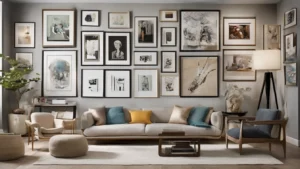
Rather than displaying pieces in isolation, grouping artworks thematically can create a richer narrative and encourage more complex discussions. Imagine a wall dedicated to pieces exploring the concept of ‘home,’ incorporating works from different artists, styles, and eras. Each piece adds a new layer to the overarching theme, inviting comparisons and broader reflections.
You might group works by subject matter (e.g., urban landscapes, portraits of women), by artistic technique (e.g., various uses of collage), or by emotional resonance (e.g., pieces evoking solitude). This curation creates a mini-exhibition within your own space, prompting viewers to consider the relationships between the works and the broader ideas they represent. This approach transforms a collection of individual items into a cohesive statement, making your space a hub for thought-provoking dialogue. This moves far beyond decoration.
Integrating Art with Your Personal Narrative
The most meaningful discussions often arise from personal connections. When the art you select also reflects your own values, experiences, or interests, it opens a deeper channel for conversation. People are naturally curious about why specific pieces resonate with you.
Perhaps you’ve collected pieces by local artists to celebrate your community, or works that reflect a particular social cause you’re passionate about. Sharing the story behind your acquisition – why you chose it, where you found it, what it means to you – adds a layer of intimacy and authenticity to the conversation. This personal narrative makes the art feel more alive and invites others to share their own connections, fostering a unique and memorable exchange. When the art is part of your story, it naturally promotes meaningful discussion.
Practical Strategies for Selecting Conversational Art
Asking the Right Questions Before You Buy
Before committing to a piece, ask yourself a series of critical questions that go beyond mere aesthetic appeal. This self-interrogation helps ensure you’re selecting art that truly aligns with your goal of fostering discussion.
- **Does it evoke an immediate strong feeling or reaction?** This could be curiosity, discomfort, joy, or confusion. Strong reactions often lead to strong opinions and vibrant discussions.
- **Does it raise questions in your mind?** Does it make you wonder about the artist’s intent, the subject’s story, or the message behind its composition?
- **Is there a clear narrative or concept to explore?** Even if it’s abstract, does it feel like it’s communicating something specific that can be discussed?
- **Will it stand the test of time in provoking thought?** Avoid trendy pieces that might lose their conversational impact as quickly as their aesthetic appeal fades.
- **Does it align with your values or areas of interest?** Your genuine connection will make it easier to talk about the piece passionately.
Taking the time to answer these questions honestly will guide you towards pieces that offer lasting conversational value, moving beyond decoration.
Exploring Different Art Forms and Media
Conversational art isn’t limited to paintings. Exploring a diverse range of art forms and media can offer fresh avenues for discussion. Each medium brings its own characteristics and interpretive challenges.
- **Sculpture:** Three-dimensional works invite viewers to walk around them, engaging with different perspectives and how light interacts with form. They can spark discussions about space, volume, and materiality.
- **Photography:** Documenting reality, conceptual photography, or manipulated images can prompt conversations about truth, perception, and the power of the lens.
- **Mixed Media/Assemblage:** These works combine various materials, encouraging discussions about texture, juxtaposition, and the transformation of everyday objects into art.
- **Textile Art:** Weaving, embroidery, or quilting can delve into themes of craft, tradition, labor, and social commentary, offering unique tactile and visual experiences.
Don’t be afraid to step outside your comfort zone and consider media you haven’t explored before. A new medium can open up entirely new types of conversations.
Comparison: Original Art vs. Prints
When aiming for art that promotes meaningful discussion, understanding the nuanced differences between original art and prints is crucial. Each has its place, but their impact and conversational potential can vary.
Original Art:
An original piece (a painting, sculpture, unique drawing) carries the direct touch of the artist. Its value often lies in its singularity and the visible evidence of the creative process—the texture of the paint, the pencil marks, the imperfections. This tangibility can spark discussions about the artist’s technique, their hand, and the unique energy embedded in a one-of-a-kind creation. It feels more intimate, more personal, and often facilitates deeper engagement precisely because of its unique presence. The story of acquiring an original piece can itself be a point of conversation, adding to its discussion value.
Prints (Limited Edition vs. Open Edition):
Prints, whether limited or open edition, are reproductions of an original work. Limited edition prints are signed and numbered by the artist, indicating a fixed, smaller run. Open edition prints are mass-produced without such restrictions. While more accessible and affordable, the conversation around prints tends to focus more on the image itself rather than the physical object or the artist’s unique touch. They can be excellent for introducing a wide range of people to an artist’s work, but they might not carry the same weight of presence that an original does. However, highly conceptual or politically charged prints can certainly spark significant dialogue based on their visual content alone. If your primary goal is to have the *image* prompt discussion, prints can be a highly effective and budget-friendly choice. If the goal is to discuss the *art object* itself, an original is often more compelling.
Ultimately, the choice depends on your specific goals and budget. Both can contribute to your aim of selecting art that moves beyond decoration, but originals often provide an additional layer of depth for discussion.
Facilitating Discussion: Beyond the Purchase
Creating an Environment for Dialogue
Acquiring art that promotes meaningful discussion is only the first step. The next is creating an environment where these conversations can naturally flourish. This involves more than just hanging the piece; it’s about subtle cues and active encouragement.
- **Thoughtful Lighting:** Proper lighting can highlight features and draw attention to the artwork, signaling its importance and inviting a closer look.
- **Strategic Placement:** Ensure there’s enough space around the piece for people to gather and converse comfortably without feeling rushed or crowded.
- **Minimal Clutter:** A busy environment distracts from the art. Keep the area around thought-provoking pieces relatively clean and uncluttered.
- **Informational Cues (Optional):** Small, discreet labels with the artist’s name, title of the work, and perhaps a sentence or two of context can provide a springboard for conversation, especially for guests less familiar with art.
The aim is to make the art feel like an invitation, not just an ornament.
Guiding Questions to Spark Conversation
Sometimes, people need a little nudge to start talking about art. As a host or curator of your space, you can act as a facilitator by offering open-ended questions. Avoid leading questions that pre-empt answers; instead, aim to encourage personal interpretation and genuine curiosity.
Here are some examples:
- “What’s the first thing you notice about this piece?”
- “How does this art make you feel?”
- “What story do you think the artist is trying to tell?”
- “If you could ask the artist one question about this work, what would it be?”
- “Does this piece remind you of anything else you’ve seen or experienced?”
- “What do you think the most interesting part of this piece is, and why?”
- “If this piece were meant to represent [a specific emotion, idea, or social issue], what would it be and how?”
These questions bypass simple “likes” or “dislikes” and delve into deeper engagement, truly enabling the art to promote meaningful discussion.
Embracing Diverse Interpretations and Disagreement
The beauty of art that sparks discussion lies in its capacity for multiple interpretations. Not everyone will see the same thing, feel the same way, or even like the piece. This diversity of opinion is not a failure; it’s the very essence of meaningful dialogue.
Encourage lively debate and be open to viewpoints that differ from your own. Frame disagreements as opportunities for learning and understanding, rather than as conflicts. For example, “That’s an interesting perspective; I hadn’t thought about it that way. What makes you see X instead of Y?” This fosters an atmosphere of intellectual curiosity and respect, where people feel safe to express their genuine thoughts and feelings, even if they’re unconventional. Remember, the goal is not consensus, but enriched understanding, demonstrating that art is truly beyond decoration.
Case Study: A Home Transformed by Conversational Art
Let’s consider a practical example of how art selection moved beyond decoration and utterly transformed a living space. Sarah, a marketing professional, loved art but admitted most of her existing collection consisted of “pretty pictures” that simply matched her decor. She wanted her home to reflect her intellectual curiosity and spark genuine conversations among her friends and family.
Before: The “Pleasant but Passive” Collection
Sarah’s living room featured a large abstract painting with soothing colors, chosen primarily because it complemented her sofa. Her dining room had a series of generic landscape prints. While aesthetically pleasing, these pieces rarely garnered more than a passing compliment. Guests would glance at them, maybe say “Oh, that’s nice,” and then the conversation would move on. There was no depth, no engagement beyond surface-level aesthetics.
The Shift: Intentional Curation for Dialogue
Sarah decided to replace key pieces with works explicitly chosen to promote meaningful discussion.
- **The Living Room Statement Piece:** Instead of another abstract, she invested in a mixed-media piece by a contemporary artist known for his commentary on consumerism. The artwork incorporated discarded packaging materials, intricate patterns, and a subtle, almost hidden, sardonic expression on a central figure.
- **The Dining Room Narrative:** For the dining room, she selected a diptych (two panels) by a local photographer that explored themes of urban decay and renewal. One panel showed a crumbling historical building, the other pictured a vibrant community garden thriving on what was once a neglected lot.
- **The Quiet Nook Provocation:** In a quieter reading nook, she placed a small, minimalist sculpture. At first glance, it appeared to be a simple stack of natural stones, but upon closer inspection, one stone was subtly out of balance, threatening to topple the whole structure.
The Transformation: Art as a Conversational Catalyst
The change was immediate and profound. During her next dinner party:
- **Living Room:** Guests gravitated towards the mixed-media piece. “Is that really made of trash?” one asked, intrigued. “It’s unsettling yet beautiful,” another mused. This led to a discussion about consumption habits, sustainability, and the arbitrary nature of ‘value’ in society. Sarah shared insights about the artist’s background, deepening the conversation.
- **Dining Room:** Over dessert, the two photographic panels became a focal point. Someone commented, “It makes you think about how we define progress.” Another added, “It’s hopeful, but also a bit sad for what was lost.” The conversation flowed organically into urban planning, community resilience, and historical preservation.
- **Reading Nook:** A friend, pausing for a moment of quiet, noticed the sculpture. “This makes me feel anxious, like it could fall any second,” she observed. This sparked a conversation about balance in life, the fragility of stability, and how even small things can have big consequences.
Sarah’s home wasn’t just visually appealing; it became a dynamic space where ideas were exchanged, perspectives were challenged, and connections were forged. The art wasn’t just on the walls; it was actively participating in the life within those walls, proving that selecting art can go far beyond decoration to enrich every interaction.
Future Trends in Art Selection for Dialogue
Interactive and Performance Art in Private Spaces
As technology blurs the lines between viewer and participant, future trends in selecting art for discussion will lean towards interactive and performance-based pieces, even in private settings. Imagine a digital art installation that responds to movement, or a kinetic sculpture that changes form over time. These works inherently invite engagement and open dialogue about technology, sensory experience, and the very definition of art.
Performance art, traditionally confined to galleries, might find its way into homes through virtual reality experiences or small, curated live events. Such art forces immediate, visceral reactions and subsequent discussion about the ephemeral nature of art, the role of the audience, and the boundaries of creation. This pushes the concept of art well beyond decoration into active experience.
AI-Generated Art and the Question of Authorship
The rise of AI-generated art presents a fascinating and complex new frontier for discussion. As algorithms become increasingly sophisticated at creating visual works, questions about authorship, creativity, and the human element in art will proliferate. Selecting an AI-generated piece could open up profound philosophical debates: Can a machine be an artist? Where does the ‘meaning’ reside in art without human intent?
Displaying such a piece automatically invites critical examination of technology’s role in society, the definition of originality, and the future of creative industries. This isn’t just about the visual appeal; it’s about the inherent discussion points woven into the very fabric of its creation, making it a powerful tool to promote meaningful discussion about our evolving relationship with technology.
Art as a Commentary on Climate and Social Justice
The urgency of global challenges like climate change and social inequality will continue to drive artists to create powerful commentary, making these themes central to future conversational art. Art selectors will increasingly seek out pieces that not only reflect these issues but actively provoke thought and inspire action.
This could mean large-scale installations made from recycled materials, works using data visualization to expose environmental impact, or pieces that directly address systemic injustices. These selections serve a dual purpose: they are aesthetically engaging, but critically, they foreground vital conversations about our collective future and responsibilities. Choosing such art transforms a space into a platform for advocacy and awareness, solidifying art’s role far beyond decoration.
What makes a piece of art “conversational”?
A conversational piece of art is one that goes beyond mere aesthetic appeal to evoke strong feelings, raise questions, or present challenging ideas. It often has layers of meaning, incorporates symbolism, or directly addresses relevant social, political, or philosophical themes. The art encourages viewers to pause, ponder, and verbally express their interpretations, leading to discussion. It doesn’t necessarily have to be beautiful, but it must be thought-provoking and engaging on a deeper level than superficial admiration.
How can I find artists whose work is designed to provoke thought?
To find thought-provoking art, explore contemporary art galleries, university art exhibitions, and online art platforms that feature emerging artists. Look for artists who incorporate social commentary, philosophical concepts, or unconventional materials and techniques into their work. Read artist statements, interviews, and reviews to understand their intentions and themes. Attending art fairs or following art critics and curators on social media can also expose you to new and challenging artists whose work actively aims to promote meaningful discussion.
Is all abstract art conversational?
Not all abstract art is inherently conversational, but much of it holds significant potential for discussion. While representational art often tells a clear story, abstract art invites individual interpretation, making it a fertile ground for dialogue. Discussions might revolve around the emotions it evokes, the elements and principles of design employed (color, line, form), the artist’s process, or how different viewers perceive unique meanings. However, some abstract art is purely decorative. To choose conversational abstract art, look for pieces that feel complex, layered, or emotionally charged, rather than simply harmonious or aesthetically pleasing.
How do I introduce a controversial art piece to guests without alienating them?
Introducing a controversial piece requires sensitivity. Start by providing a little context about the artist or the theme without revealing too much or pre-empting opinions. You might say, “This piece by [Artist Name] explores [Theme]. It’s generated a lot of discussion.” Then, ask open-ended questions like, “What’s your initial reaction?” or “What do you think the artist is trying to convey?” Frame the conversation as an exploration of ideas, not a test. Emphasize that diverse opinions are welcome and encourage respectful debate. The goal is to promote meaningful discussion, not necessarily agreement.
Can too much conversational art make a space feel overwhelming?
Yes, it’s possible for a space with too many highly charged or conversational pieces to feel overwhelming or intellectually exhausting. The key is balance. Just as a good book needs moments of pause alongside intense chapters, a thoughtfully curated space benefits from a mix. Include some pieces that are purely aesthetic or provide visual rest. Strategically place your most conversational pieces where they can be given proper attention without competing for dominance. Vary the subject matter and emotional tone. The aim is to stimulate, not to constantly challenge, ensuring that the art truly promotes meaningful discussion rather than continuous mental strain.
How can I learn more about art history and movements to better understand context?
To deepen your understanding of art history and movements:
- **Online Resources:** Websites like Smarthistory, Khan Academy, and museum online collections (e.g., MoMA, Metropolitan Museum of Art) offer free courses and extensive databases.
- **Books:** Invest in comprehensive art history textbooks or books focusing on specific periods or artists that interest you.
- **Museum Visits:** Explore local and national museums. Read the exhibition labels and attend guided tours or lectures offered by the museum.
- **Documentaries:** Many excellent documentaries explore artists, movements, and the historical context of art.
- **University Courses:** Consider auditing a university art history course or enrolling in online courses from platforms like Coursera or edX.
Understanding context is vital as you move beyond decoration in your art selection.
Should I prioritize personal preference or the potential for discussion?
Ideally, aim for a balance. The most effective conversational art is often a piece that genuinely resonates with you while also possessing layers that invite broader interpretation. If you don’t connect with a piece, it will be harder for you to passionately introduce or discuss it, regardless of its inherent conversational qualities. However, if your primary goal is to foster dialogue, be open to pieces that might initially challenge your aesthetic preferences but clearly possess a powerful message or unique perspective. A truly great piece will both appeal to you and effectively promote meaningful discussion.
Will selecting art that promotes meaningful discussion increase its value?
While selecting art that fosters rich conversation doesn’t directly guarantee an increase in monetary value, it certainly enhances its subjective value and appreciation. Art that sparks dialogue often does so because it is conceptually strong, culturally relevant, or emotionally resonant – qualities that contribute to its lasting significance. Pieces that are celebrated for their ability to engage viewers thoughtfully might gain prominence within the art world, potentially increasing their market value over time. However, the primary “value” here is in the enrichment of your living space and social interactions, making it far more than just something beyond decoration.
Conclusion: Curating a World of Ideas
Selecting art that promotes meaningful discussion transcends the conventional approach of choosing art beyond decoration. It’s an intentional practice of curating not just objects, but experiences, fostering intellectual curiosity, and building genuine human connection. By understanding the artist’s narrative, delving into subject matter, and thoughtfully placing pieces within your environment, you transform your walls into vibrant canvases for dialogue.
Remember, the goal isn’t to simply own art, but to engage with it, to let it challenge, inspire, and connect. The most powerful pieces are those that continue to reveal new layers, sparking fresh conversations each time you or a guest encounters them. Embrace the ambiguity, celebrate diverse interpretations, and use these visual catalysts to enrich your life and the lives of those you share your space with. By choosing art with purpose, you’re not just decorating; you’re cultivating a world of ideas, one thought-provoking piece at a time. This journey into art selection isn’t just about aesthetics; it’s about making a statement, inviting introspection, and truly making your space a hub for profound conversations. Continue exploring and let art open new doors for understanding and connection.
For more insights into creating deeply enriching environments, explore our guide on Understanding Art as a Lifestyle Choice or delve into the nuances of The Psychology of Color in Interior Design. Also consider resources from the Metropolitan Museum of Art collection for further inspiration, and the Tate’s glossary of art terms to enhance your vocabulary.
Categories
- Accent Walls & Ceilings (84)
- Art Curation & Gallery (83)
- Bedding Style Trends (89)
- Bedroom Makeover (96)
- Bohemian & Eclectic Styles (80)
- DIY & Budget-Friendly Decor (78)
- Eco-Friendly Design (83)
- Furniture Care (87)
- Home Decor & Design Ideas (181)
- Home Wellness Spaces (103)
- Integrated Outdoor Living (91)
- Japandi Style (84)
- Kids and Nursery Decor (73)
- Living Room Decor (99)
- Mix & Match Techniques (95)
- Modern & Contemporary Design (88)
- Rug Sizing & Placement (89)
- Scandinavian Design Inspiration (51)
- Seasonal Home Decor (100)
- Small Space Solutions (93)
- Wall Art & Painting Tips (94)
Recent Comments
Archives
Product Gallery
-
 Majestic African Wildlife Canvas Art for Stylish Home Decor
Rated 5.00 out of 5
Majestic African Wildlife Canvas Art for Stylish Home Decor
Rated 5.00 out of 5 -
 Cozy Irregular Green Plush Rug for Nordic Living Spaces
Rated 5.00 out of 5$44.23 – $278.89Price range: $44.23 through $278.89
Cozy Irregular Green Plush Rug for Nordic Living Spaces
Rated 5.00 out of 5$44.23 – $278.89Price range: $44.23 through $278.89 -
 Scandinavian Geometric Area Rugs for Stylish Home Décor
Rated 5.00 out of 5$33.15 – $502.10Price range: $33.15 through $502.10
Scandinavian Geometric Area Rugs for Stylish Home Décor
Rated 5.00 out of 5$33.15 – $502.10Price range: $33.15 through $502.10