Finding the perfect balance between large and small art pieces can transform any space, creating harmony in contrast that captivates and inspires. Whether you’re an art lover, interior designer, or homeowner looking to elevate your decor, mastering this art unlocks creative freedom and impeccable style.
In this detailed guide, you’ll discover proven strategies to arrange different-sized artworks cohesively, the psychological impact of art scale, and practical tips for placement, color coordination, and framing choices. We’ll navigate through challenges and share real-life case studies so you can confidently curate stunning gallery walls, living rooms, or office spaces with a dynamic blend of large and small art pieces.
Understanding Art Scale and Visual Balance in Interiors
What Does Harmony in Contrast Mean in Art Arrangement?
Harmony in contrast is about balancing opposing elements—like large and small art pieces—to create a cohesive look that feels both dynamic and unified. Large pieces draw the eye and set the scene; smaller pieces add detail and personality. Together, they weave a story without fighting for attention.
The Psychology Behind Art Scale
Scale influences mood and perception. Large artworks often evoke grandeur or calm, dominating a space and giving a focal anchor. Small artworks bring intimacy, invite closer inspection, and offer subtle storytelling. Combining these scales thoughtfully impacts how a room feels and how people interact with it.
Key Principles for Visual Balance
Proportion: Ensuring artworks’ sizes relate well to the room and one another.
Spacing: Avoid overcrowding; allow breathing room between each piece.
Weight: Visual “weight” depends on size, color, and complexity; balance heavier pieces with lighter ones.
Focal Point: Large pieces often become focal anchors; small pieces support and complement.
These guidelines create a rhythm that helps diverse artworks coexist beautifully.
Actionable Takeaways:
Start by selecting a dominant large art piece as the anchor.
Analyze the room size to choose proportional artwork.
Plan spacing that prevents visual clutter.
Techniques for Mixing Large and Small Art Pieces Smoothly
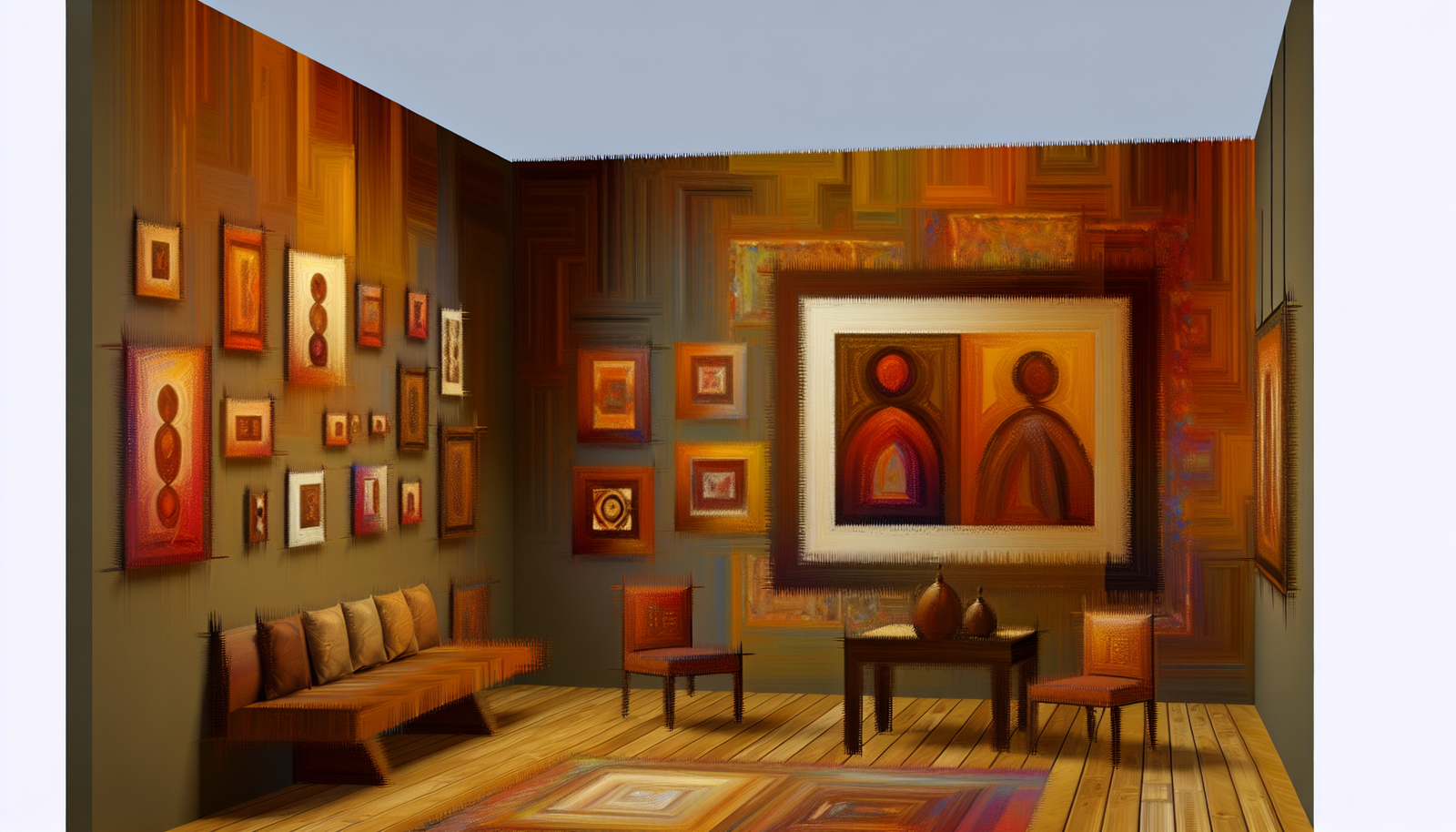
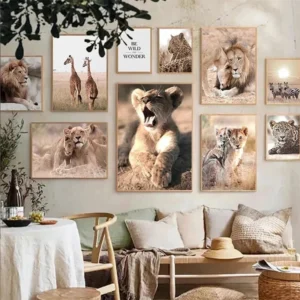
Gallery walls offer endless possibilities to mix sizes effectively. Successful arrangements often use grids, freestyle, or salon-style layouts.
Grid Layout: Align artworks in rows and columns, balancing large pieces with smaller ones by alternating placement.
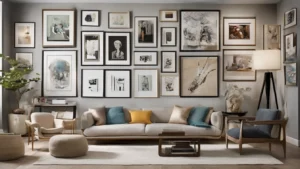
Salon Style: Layer artworks organically, clustering different sizes around a featured medium piece.
Floating Layout: Offset smaller works around one or two large focal points with generous spacing.
Balance Through Color and Theme
Color continuity and thematic coherence unify diverse scales. A palette that repeats through various artworks or a consistent theme such as abstract, nature, or portraits brings visual peace.
Using Frames as a Unifying Element
Matching or complementary frames bridge the gap between different artwork sizes and styles. Thin black or wooden frames often offer subtle cohesion, while bold frames can add character if thoughtfully combined.
Tools for Planning Layouts
Digital apps like ArtRooms and Mural help visualize artwork combinations on room walls, preventing mistakes before hanging.
Actionable Takeaways:
Sketch or use software to try different layouts digitally.
Maintain consistent spacing, ideally 2-4 inches between pieces.
Use repeated colors or frames for visual unity.
Color Coordination and Frame Choices for Harmonious Displays
Color Psychology and Impact
Colors evoke feelings and influence art’s presence. Light colors amplify space and calm; rich colors demand attention and depth. Harmonizing color schemes across your artworks cultivates balance.
Choosing Frames That Complement Art and Room Decor
Frame choice can make or break harmony. Neutral frames serve as understated connectors, while custom, bold frames serve as extensions of your personal style.
Mixing Frame Styles and Sizes
Experimenting with frame thickness or material can add texture without disrupting balance when anchored by consistent color or style. For example, pairing sleek metal frames on large paintings with smaller wooden frames in lighter tones crafts an appealing contrast.
Actionable Takeaways:
Use color charts to define and repeat palettes within your artwork collection.
Pick frames that either blend or intentionally contrast but keep framing consistent.
Consider matte borders to enhance smaller pieces without overwhelming.
Creative Layout Ideas and Thematic Cohesion
Thematic Grouping for Storytelling
Grouping artwork by subject matter or era tells a cohesive narrative. For example, combining large landscapes with smaller botanical prints creates a nature-focused theme that feels curated and intentional.
Using Negative Space Intentionally
Negative space—the empty areas around artworks—is vital for balance. Embrace white space between pieces to prevent visual overload and spotlight each art piece, regardless of size.
Incorporating Non-Art Elements
Shelves, sculptures, and decorative objects enhance dimensionality alongside your art. Use plants or subtle lighting to add layers that complement your art’s scale without overpowering the walls.
Comparison Table: Common Large vs. Small Art Layout Approaches
Aspect
Large Art Pieces
Small Art Pieces
Visual Impact
Focal points, room anchors
Detail, intimacy, complementary
Placement
Center walls, above furniture
Surround anchors, fill gaps
Frame Style
Bold or minimalist
Subtle or thematic
Spacing
Ample room for emphasis
Crowded or generous depending on grouping
Actionable Takeaways:
Create story arcs through thematic artwork collections.
Respect negative space like an invisible frame.
Use non-art elements to enrich your arrangement.
Practical Tools, Resources, and Expert Insights
Expert Quotes
“Balancing size in art is less about rules and more about feeling. When your eyes move effortlessly across a wall, you’ve found harmony in contrast.” — Linda Harper, Interior Designer
Top Tools for Planning and Inspiration
ArtRooms: Upload your art and room photos to test layouts virtually.
Canva: Design collages or mood boards to explore color and frame ideas.
Pinterest: Discover endless gallery wall inspiration and size balancing ideas.
Real-World Case Study
When Emily, a New York-based art collector, wanted to renovate her living room, she used a large abstract painting as an anchor and arranged smaller vintage photographs, all framed in natural woods. The resulting gallery wall melded modern and classic vibes, increasing room warmth and visual interest dramatically.
Actionable Takeaways:
Use virtual tools to preview before committing.
Gather inspiration that matches your room’s style and size.
Don’t shy from mixing eras with thoughtful framing and color.
Frequently Asked Questions about Balancing Large and Small Art Pieces
How do I create balance between a large painting and small artworks?
Start with the large painting as the visual anchor, then group smaller pieces around it with consistent spacing and complementary colors or frames to maintain flow and cohesion.
What frame styles work best when mixing art sizes?
Neutral frames like black, white, or natural wood create unity, but mixing materials with consistent color tones can add depth without disrupting harmony.
Is it better to cluster small art or space them out?
Both work depending on your room size and style. Clustering creates intimacy while spacing lends airy sophistication—adapt according to your space.
Can I mix art styles when balancing different sizes?
Yes, if you unify them through color or framing. Mixing abstract with realism, for instance, works well when you keep the overall palette cohesive.
How much space should I leave between artworks?
Typically 2-4 inches between pieces allows for breathing room, preventing clutter while keeping connectedness intact.
What if my room walls are small? Can I still use large art?
Choose proportionally scaled large pieces or use one large focal piece augmented by smaller artworks to avoid overwhelming the space.
Are there risks of mixing too many different art sizes?
Yes, excessive variation without unity can appear chaotic. Use consistent framing, color schemes, or thematic ties to avoid visual confusion.
Conclusion & Next Steps
Mastering the art of balancing large and small art pieces unlocks stunning design possibilities. By understanding scale principles, using thoughtful layouts, coordinating colors and frames, and embracing contrast with harmony, you create spaces that tell your story dynamically and elegantly.
Remember: Start with a strong anchor, respect negative space, and unify diverse elements through color and framing. Don’t hesitate to experiment with digital tools, gather inspiration, and adapt ideas to your unique environment.
Ready to transform your space with balanced art? Begin by selecting your centerpiece and planning complementary smaller pieces. Explore our gallery wall ideas and art color coordination guide for deeper dives.
Content Disclaimer
Information provided in this article is for educational purposes only. Individual results may vary based on personal style and circumstances.