



What’s The Ideal Rug Size Under a King Bed? Let’s Find Out!

Walking into a beautifully designed bedroom only to see a tiny rug drowning under a massive king bed feels like wearing socks with sandals – technically functional, but something’s clearly off. If you’ve ever stood in your bedroom wondering whether your rug looks proportional or if you should size up (or down), you’re not alone in this decorating dilemma.
The relationship between rug size and king bed placement can make or break your bedroom’s visual flow. Too small, and your rug becomes an afterthought that disrupts the room’s balance. Too large, and you’ve got fabric climbing walls or disappearing under furniture where no one will appreciate its beauty.
This comprehensive guide reveals the exact dimensions that create bedroom harmony, explores multiple layout options for different room sizes, and shares professional designer secrets for achieving that “just right” feeling you see in magazine spreads. You’ll discover why the standard advice doesn’t always work, learn specific measurements for common scenarios, and understand how to adapt these principles to your unique space and lifestyle needs.
From apartment bedrooms to master suites, we’ll cover placement strategies that maximize both visual impact and practical function, ensuring your investment enhances rather than overwhelms your sleeping sanctuary.
Understanding King Bed Dimensions and Space Requirements
Before diving into rug size recommendations for king beds, let’s establish the foundation: your king bed’s actual footprint and spatial needs. A standard king mattress measures 76 inches wide by 80 inches long, but the bed frame typically adds 2-4 inches to each dimension, creating a total footprint around 78-80 inches wide and 82-84 inches long.
However, your bed doesn’t exist in isolation. Interior designers recommend maintaining at least 24-30 inches of walkway space around the bed for comfortable movement. This means your king bed actually claims a functional area of approximately 126-140 inches wide by 130-144 inches long when accounting for necessary clearance zones.
Room Size Considerations
The ideal rug size under your king bed depends heavily on your bedroom’s dimensions. Small bedrooms (10×12 feet) face different challenges than spacious master suites (16×20 feet or larger). Here’s how room size impacts your rug selection:
- Compact bedrooms: Focus on rugs that define the bed area without overwhelming limited floor space
- Medium bedrooms: Balance rug coverage with furniture placement and movement patterns
- Large bedrooms: Use rugs to create intimacy and prevent the space from feeling cavernous
Understanding these spatial relationships helps you choose a rug size that enhances rather than competes with your room’s proportions. The goal isn’t simply fitting a rug under your bed – it’s creating visual harmony between all elements in your bedroom ecosystem.
The Three Essential Rug Layout Options for King Beds
Professional designers rely on three proven layout strategies when determining the best rug size for king size bed placement. Each approach serves different aesthetic goals and practical needs, making your choice dependent on room size, furniture arrangement, and personal preferences.
Layout Option 1: The Full Room Coverage Approach
This layout uses a large rug (typically 9×12 feet or 10×14 feet) that extends well beyond the bed on all sides. The rug becomes a foundational element that unifies the entire bedroom, with the bed floating confidently in the center of this textile landscape.
Recommended dimensions: 9×12 feet minimum, 10×14 feet or 12×15 feet for larger rooms
Best suited for: Master bedrooms with ample floor space, rooms where the bed is the clear focal point, and spaces that benefit from visual cohesion across multiple furniture pieces.
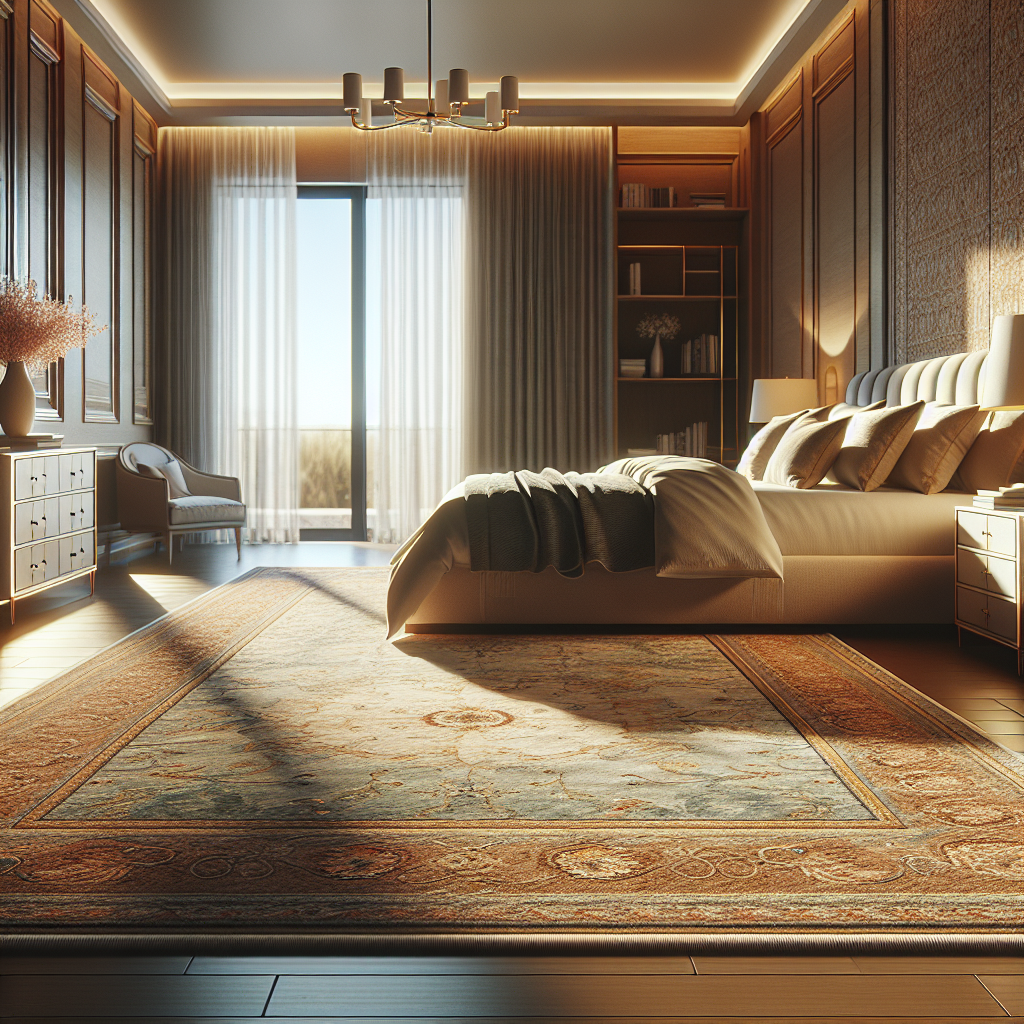
With this approach, the rug should extend 24-36 inches beyond the foot of the bed and 18-30 inches beyond each side. This creates a luxurious foundation that makes the entire room feel more expensive and thoughtfully designed. When you step out of bed, your feet land on the rug regardless of which side you exit.
Layout Option 2: The Bed-Focused Strategy
This middle-ground approach uses a 8×10 or 9×12 foot rug positioned to highlight the bed while leaving some hard flooring visible around the room’s perimeter. The rug extends beyond the bed’s footprint but doesn’t dominate the entire floor space.
Recommended dimensions: 8×10 feet or 9×12 feet
Best suited for: Medium-sized bedrooms, rooms with beautiful hardwood or tile flooring worth showcasing, and spaces where you want the rug to frame rather than overwhelm the bed.
Position the rug so it extends 18-24 inches beyond the foot of the bed and 12-18 inches beyond each side. This creates a clear boundary around the sleeping area while maintaining visual breathing room between the rug and walls or other furniture pieces.
Layout Option 3: The Accent Placement
This approach uses a smaller rug (typically 6×9 or 8×10 feet) positioned strategically to accent specific areas rather than encompass the entire bed. Common placements include extending from the foot of the bed toward the center of the room or creating a landing zone on one side of the bed.
Recommended dimensions: 6×9 feet to 8×10 feet
Best suited for: Smaller bedrooms, rooms with stunning floor materials, spaces with complex furniture arrangements, or budgets that require strategic rather than comprehensive rug coverage.
The most popular accent placement extends 12-18 inches beyond the foot of the bed and 6-12 inches beyond each side. This creates a visual anchor without committing significant floor space to textile coverage.
Precise Measurements: Rug Dimensions That Actually Work
Moving beyond general guidelines, let’s examine specific king bed rug size measurements that professional designers use in real-world projects. These dimensions account for furniture scale, room proportions, and the visual weight that different rug sizes create in bedroom environments.
The 9×12 Foot Standard: Why This Size Dominates
The 9×12 foot rug has become the unofficial standard for king bed bedrooms, and for good reason. This size provides 18 inches of rug extension beyond a standard king bed frame on each side (assuming an 80-inch wide bed frame) and 24 inches beyond the foot of the bed (assuming an 84-inch long bed frame).
This mathematical relationship creates visual balance without overwhelming smaller bedrooms or appearing insignificant in larger spaces. The 9×12 dimension also aligns with standard rug manufacturing sizes, making it widely available and often more budget-friendly than custom dimensions.
When to Size Up: 10×14 and Larger Options
Larger rugs become necessary when your bedroom exceeds 14×16 feet or when you want to include additional furniture pieces within the rug’s boundaries. A 10×14 foot rug allows nightstands to sit partially or entirely on the rug while maintaining generous clearance around the bed.
Consider these larger dimensions when:
- Your bedroom includes seating areas or dressing zones
- You prefer the luxurious feel of extensive rug coverage
- Your room’s proportions make a 9×12 rug appear undersized
- You want to anchor multiple furniture groupings within one cohesive textile foundation
The investment in a larger rug often pays dividends in perceived room quality and comfort, particularly in master bedroom settings where the space serves multiple functions beyond sleeping.
Sizing Down: When Smaller Works Better
Contrary to the “bigger is better” mentality, some bedrooms genuinely benefit from smaller rug dimensions. An 8×10 foot rug can create perfect proportions in rooms where a 9×12 would overwhelm the space or compete with architectural features worth highlighting.
Choose smaller dimensions when:
- Your bedroom measures less than 12×14 feet
- Beautiful hardwood, tile, or stone flooring deserves to remain visible
- Budget constraints require strategic rather than comprehensive coverage
- Your design aesthetic favors minimalism over abundance
Placement Strategies That Maximize Visual Impact
Selecting the right rug size under king bed represents only half the design equation. Strategic placement determines whether your chosen rug enhances or detracts from your bedroom’s overall composition. Professional designers rely on specific positioning techniques that create visual harmony while serving practical functions.
The Centered Approach: Classic Symmetry
The most traditional placement centers the rug directly under the bed, creating equal extension on all visible sides. This approach works particularly well with symmetrical bedroom layouts where matching nightstands and lamps create balanced compositions.
To execute centered placement effectively:
- Measure your bed frame’s exact dimensions including any decorative footboards
- Mark the bed’s center point on your floor (temporary tape works well)
- Position the rug so its center aligns with the bed’s center
- Verify equal clearance on both sides and adequate extension beyond the foot
This placement strategy creates immediate visual stability and works well with both traditional and contemporary bedroom designs. The symmetrical relationship between rug and bed provides a foundation that makes other design elements appear more intentional and polished.
The Offset Strategy: Creating Dynamic Interest
Advanced designers sometimes deliberately offset rug placement to create more dynamic visual relationships. This approach works particularly well in asymmetrical bedrooms or spaces where architectural features create natural focal points beyond the bed itself.
Offset placement might position the rug to:
- Emphasize a seating area or reading nook
- Highlight beautiful flooring near windows or architectural details
- Accommodate awkward room proportions that make centering impractical
- Create intentional movement and visual interest in minimal bedrooms
This technique requires careful consideration of sight lines and movement patterns. Done successfully, offset placement can make bedrooms feel more spacious and thoughtfully curated than traditional centered approaches.
Partial Coverage: Strategic Minimalism
Sometimes the most impactful approach involves strategic restraint. Partial coverage places the rug to highlight specific areas rather than attempting comprehensive floor coverage. This might mean positioning a runner along one side of the bed or creating a landing zone at the foot.
Partial coverage excels when:
- Your bedroom features stunning hardwood or tile worth showcasing
- Budget constraints require focused rather than extensive rug investment
- Architectural elements create natural divisions that benefit from selective emphasis
- Your design aesthetic favors clean lines and uncluttered compositions
Common Sizing Mistakes and How to Avoid Them
Even well-intentioned homeowners frequently make predictable errors when selecting bedroom rug size for king bed setups. Understanding these common pitfalls helps you avoid expensive mistakes and achieve professional-quality results from your first attempt.
The “Too Small” Trap
The most frequent mistake involves choosing rugs that appear overwhelmed by the bed’s substantial footprint. A 5×8 foot rug under a king bed creates the visual equivalent of a child wearing adult clothing – the proportions simply don’t align with our expectations of balance and harmony.
Signs your rug is too small:
- The rug extends less than 12 inches beyond the bed on any side
- Stepping out of bed lands your feet on hard flooring rather than the rug
- The rug appears to be “floating” under the bed rather than anchoring it
- Other furniture pieces near the bed have no relationship to the rug boundaries
This mistake often stems from underestimating how much visual weight a king bed carries in bedroom compositions. The bed’s substantial presence requires a rug with enough scale to provide adequate visual foundation rather than appearing as an afterthought.
The “Overcrowding” Problem
On the opposite extreme, some homeowners choose rugs so large they create cramped feelings or practical complications. A rug that extends too close to walls or under heavy furniture pieces can make rooms feel smaller rather than more luxurious.
Indicators of overcrowding include:
- Less than 12 inches of clearance between rug edges and walls
- Difficulty accessing closets, doors, or windows due to rug placement
- The rug disappearing under dressers, chairs, or other substantial furniture
- A feeling of visual heaviness rather than enhanced comfort
Remember that negative space around rugs contributes to their visual impact. Some exposed flooring creates breathing room that makes the rug appear more intentional and the room feel more spacious.
Ignoring Room Proportions
Perhaps the subtlest but most important mistake involves selecting rug dimensions without considering the bedroom’s specific proportions. A 9×12 rug might work beautifully in most king bed rooms, but could overwhelm a narrow 11×14 bedroom or appear insufficient in a sprawling 20×24 master suite.
Always consider:
- Your room’s length-to-width ratio
- Ceiling height and its impact on visual scale
- Window placement and natural light patterns
- Architectural features that affect sight lines
Design Considerations Beyond Size
While achieving the perfect king size bed rug dimensions provides essential foundation, successful bedroom design requires attention to color, pattern, texture, and material choices that complement your spatial decisions. These elements work together to create cohesive environments that feel both comfortable and visually appealing.
Color Psychology in Bedroom Rugs
Rug color affects both the perceived size of your bedroom and its emotional atmosphere. Light colors reflect available light and can make rooms feel larger, while darker tones create intimacy and warmth but may visually contract space.
Strategic color choices include:
- Neutral foundations: Beige, gray, and cream provide versatility for changing bedding and décor
- Bold anchors: Deep blues, rich burgundies, or forest greens add sophistication to large bedrooms
- Soft accents: Pale blues, blush tones, or sage greens create serene atmospheres conducive to rest
Consider how your chosen rug color interacts with wall colors, bedding choices, and natural light throughout the day. A rug that looks perfect in afternoon sunlight might feel entirely different under evening lamplight.
Pattern Considerations for Large Rugs
Large rugs under king beds can accommodate more complex patterns than smaller accent rugs, but pattern choices should enhance rather than compete with other bedroom elements. Geometric patterns can add visual interest to minimalist bedrooms, while traditional motifs complement classic furniture styles.
Pattern guidelines for bedroom rugs:
- Large-scale patterns work well in spacious rooms with high ceilings
- Small, intricate patterns can feel busy in bedrooms where rest is the primary goal
- Subtle textures and tone-on-tone designs provide interest without overwhelming
- Bold patterns work best when other room elements remain relatively simple
Texture and Material Impact
Bedroom rugs serve both visual and tactile functions. The feeling under your feet when stepping out of bed contributes significantly to your daily experience. Plush materials like wool or high-quality synthetics provide comfort, while natural fibers like jute or sisal offer texture but less cushioning.
Material considerations include:
- Wool: Durable, naturally stain-resistant, excellent for high-traffic bedrooms
- Cotton: Soft, washable, budget-friendly for guest bedrooms or children’s spaces
- Synthetic blends: Stain-resistant, consistent appearance, good for pet-friendly homes
- Natural fibers: Eco-friendly, unique textures, best for low-traffic applications
Budget-Friendly Strategies for King Bed Rug Selection
Achieving the perfect rug placement under king bed doesn’t require unlimited budgets, but it does demand strategic thinking about where to invest and where to save. Understanding the relationship between rug quality, size, and cost helps you make decisions that maximize both visual impact and long-term satisfaction.
Size Versus Quality Trade-offs
When budget constraints force choices between rug size and material quality, consider your bedroom’s specific needs and your household’s lifestyle patterns. A larger, lower-quality rug might serve better in guest bedrooms with minimal foot traffic, while a smaller, high-quality rug could work well in compact master bedrooms with daily use.
Strategic budget allocation might prioritize:
- Size first: When proper proportions matter more than luxurious materials
- Quality first: When durability and comfort take precedence over comprehensive coverage
- Balanced approach: Finding mid-range options that provide adequate size and reasonable quality
Remember that a well-proportioned, moderately-priced rug often looks more expensive than a small, high-end rug that appears lost under a king bed’s substantial presence.
Timing Your Purchase for Maximum Value
Rug retailers follow predictable seasonal patterns that savvy shoppers can leverage for significant savings. Post-holiday sales, end-of-season clearances, and new collection launches often provide opportunities to secure larger rugs at reduced prices.
Prime shopping periods include:
- January clearances following holiday shopping seasons
- Late summer sales before fall merchandise arrivals
- Black Friday and Cyber Monday online promotions
- End-of-fiscal-year clearances from major retailers
Planning rug purchases around these cycles can stretch budgets to accommodate larger sizes or higher quality materials that might otherwise exceed your price range.
Alternative Sources and Creative Solutions
Traditional retail represents just one path to successful rug acquisition. Estate sales, online marketplaces, and wholesale sources often provide access to high-quality rugs at substantially reduced prices, particularly for discontinued designs or gently used pieces.
Alternative sourcing strategies include:
- Estate sales and estate specialist websites
- Online auction platforms with authenticated vintage pieces
- Wholesale suppliers that sell to the public
- Rug rental services for temporary solutions while saving for permanent purchases
Maintenance and Longevity Considerations
Selecting the ideal rug size for king size bed represents a significant investment that should provide years of visual pleasure and functional service. Understanding maintenance requirements and longevity factors helps ensure your chosen rug continues enhancing your bedroom’s appearance throughout its lifespan.
High-Traffic Zone Planning
Bedroom rugs under king beds experience concentrated foot traffic in predictable patterns. The areas where people step out of bed, walk around the foot of the bed, and approach dressers or closets receive more wear than zones that remain primarily under furniture.
Strategic maintenance planning addresses:
- Regular rotation to distribute wear patterns evenly
- Professional cleaning schedules based on actual usage rather than arbitrary timelines
- Protective measures for high-impact zones without compromising aesthetics
- Early intervention for spills or stains to prevent permanent damage
Understanding these patterns helps you choose materials and construction methods that align with your bedroom’s specific traffic demands and your willingness to invest in maintenance routines.
Climate and Environmental Factors
Bedroom environments affect rug longevity through humidity levels, temperature fluctuations, and air circulation patterns. Bedrooms with ensuite bathrooms may experience higher humidity, while rooms with large windows might face UV exposure that affects certain materials and dyes.
Environmental considerations include:
- Humidity control to prevent mold or mildew in natural fiber rugs
- UV protection for rugs positioned near large windows
- Air circulation to prevent moisture retention under large rugs
- Temperature stability to minimize expansion and contraction in backing materials
Frequently Asked Questions
What size rug should I use under a king bed in a small bedroom?
For bedrooms smaller than 12×14 feet, an 8×10 foot rug typically provides the best proportion under a king bed. This size offers adequate foundation without overwhelming limited floor space, extending 12-18 inches beyond the bed on most sides while leaving breathing room around the room’s perimeter.
Should the rug extend under nightstands with a king bed?
This depends on your rug size and room layout preferences. With a 9×12 rug, nightstands typically sit partially on the rug’s edge, creating visual unity. For 10×14 or larger rugs, nightstands can sit entirely on the rug. Both approaches work well – choose based on your room’s proportions and aesthetic goals.
How far should a rug extend beyond the foot of a king bed?
The rug should extend 18-30 inches beyond the foot of your king bed, depending on the rug size and room layout. This distance provides adequate landing space when getting out of bed and creates proper visual proportions. Smaller bedrooms can work with 18-inch extensions, while larger rooms benefit from 24-30 inches.
Can I use a runner instead of a large rug under a king bed?
While possible, a runner rarely provides adequate visual foundation for a king bed’s substantial footprint. Runners work better as accent pieces alongside properly sized rugs, such as placing one along the side of the bed or at the foot. For primary coverage under a king bed, larger rectangular rugs create better proportional relationships.
What’s the minimum rug size that looks proportional under a king bed?
An 8×10 foot rug represents the practical minimum for king bed placement. Anything smaller risks appearing overwhelmed by the bed’s substantial presence. Even 8×10 rugs work best in compact bedrooms where larger sizes would overcrowd the space. Most designers recommend 9×12 feet as the ideal starting point for king bed rugs.
Should I choose a larger rug or higher quality material on a limited budget?
This depends on your bedroom’s size and usage patterns. In most cases, proper proportions (larger size) have more visual impact than premium materials. A well-sized, moderate-quality rug typically looks more expensive than a small, luxury rug that appears lost under a king bed. Consider your room’s traffic levels and maintenance preferences when deciding.
How do I determine if my bedroom can accommodate a 10×14 rug under a king bed?
Measure your bedroom and subtract the rug dimensions to calculate remaining clearance. You’ll need at least 12 inches (preferably 18-24 inches) between the rug edges and walls for comfortable proportions. Bedrooms smaller than 14×16 feet typically feel overcrowded with 10×14 rugs, while larger spaces can accommodate these dimensions beautifully.
What placement works best for asymmetrical or oddly shaped bedrooms?
Asymmetrical bedrooms benefit from strategic rug placement that emphasizes the room’s best features rather than centering on the bed. Consider offsetting the rug toward architectural highlights, window views, or seating areas. Sometimes partial coverage or accent placement creates better visual flow than traditional centered approaches in irregular room shapes.
Conclusion: Creating Your Perfect Bedroom Foundation
Selecting the ideal rug size under a king bed transforms your bedroom from a simple sleeping space into a thoughtfully designed retreat that reflects both style and functionality. The journey from measuring your room to positioning your chosen rug requires attention to proportions, placement strategies, and the subtle relationships between all elements in your bedroom ecosystem.
The most successful king bed rug size decisions balance mathematical precision with aesthetic intuition. While the 9×12 foot standard works beautifully in most bedrooms, your specific space might benefit from sizing up for luxury, sizing down for proportion, or strategic placement that emphasizes architectural features worth highlighting.
Remember that your rug represents both a visual anchor and a daily tactile experience. The feeling of stepping out of bed onto a properly sized, well-positioned rug contributes to those small moments of pleasure that accumulate into genuine satisfaction with your living environment. Whether you choose full room coverage, bed-focused placement, or accent positioning, the key lies in creating intentional relationships between your rug, bed, and surrounding elements.
As you implement these strategies in your own bedroom, trust both the mathematical guidelines and your instinctive responses to how the space feels when you’re in it. The perfect rug size is ultimately the one that makes your bedroom feel like home – properly proportioned, visually harmonious, and completely yours.
Take time to live with your measurements, consider your room’s unique characteristics, and choose dimensions that serve both your aesthetic goals and practical needs. Your investment in getting this foundation right will enhance every other design decision you make in your bedroom for years to come.
—
####
Content Disclaimer
The information provided in this article is for educational purposes and general guidance only. Room dimensions, furniture sizes, and personal preferences vary significantly between homes and individuals. While these recommendations represent professional design principles and industry standards, results may vary based on your specific circumstances, room layout, and aesthetic preferences. Always measure your space carefully and consider consulting with interior design professionals for complex or high-investment projects. Product recommendations and sizing suggestions are based on general market standards and may not reflect all available options or regional variations.
Categories
- Accent Walls & Ceilings (84)
- Art Curation & Gallery (83)
- Bedding Style Trends (89)
- Bedroom Makeover (96)
- Bohemian & Eclectic Styles (80)
- DIY & Budget-Friendly Decor (78)
- Eco-Friendly Design (83)
- Furniture Care (87)
- Home Decor & Design Ideas (181)
- Home Wellness Spaces (103)
- Integrated Outdoor Living (91)
- Japandi Style (84)
- Kids and Nursery Decor (73)
- Living Room Decor (99)
- Mix & Match Techniques (95)
- Modern & Contemporary Design (88)
- Rug Sizing & Placement (89)
- Scandinavian Design Inspiration (51)
- Seasonal Home Decor (100)
- Small Space Solutions (93)
- Wall Art & Painting Tips (94)
Recent Comments
Archives
Product Gallery
-
 Majestic African Wildlife Canvas Art for Stylish Home Decor
Rated 5.00 out of 5
Majestic African Wildlife Canvas Art for Stylish Home Decor
Rated 5.00 out of 5 -
 Cozy Irregular Green Plush Rug for Nordic Living Spaces
Rated 5.00 out of 5$50.99 – $321.60Price range: $50.99 through $321.60
Cozy Irregular Green Plush Rug for Nordic Living Spaces
Rated 5.00 out of 5$50.99 – $321.60Price range: $50.99 through $321.60 -
 Scandinavian Geometric Area Rugs for Stylish Home Décor
Rated 5.00 out of 5$36.62 – $554.84Price range: $36.62 through $554.84
Scandinavian Geometric Area Rugs for Stylish Home Décor
Rated 5.00 out of 5$36.62 – $554.84Price range: $36.62 through $554.84